








How to Choose the Right UHF RFID Tag for Metal Surfaces
If you’ve ever tried slapping a standard RFID sticker onto a metal tool or a server rack, only to get zero reads back from your scanner, you know the frustration. Metal reflects signals. It detunes antennas. It can turn a perfectly good RFID system into a expensive guessing game.
But here’s the good news: Metal is no longer the enemy. Over the past decade, engineering breakthroughs have given us UHF RFID tag designs that not only work on metal—they actually leverage it to boost performance . The challenge has shifted from “Does it work?” to “Which one works best for my specific application?”
With hundreds of UHF RFID tag models on the market—ranging from $2 disposable labels to $30 industrial beasts—choosing the wrong one can cost you thousands in read errors, manual workarounds, and replacement labor. This guide cuts through the technical noise and gives you a practical framework for selecting the perfect UHF RFID tag for metal surfaces, whether you’re tracking surgical tools, construction equipment, or IT assets.
Why Metal Breaks Standard RFID Tags
Before we dive into selection criteria, it helps to understand why metal causes so much trouble.
Standard passive UHF RFID tags communicate via electromagnetic waves. When you place that tag directly on a conductive metal surface, two bad things happen:
Impedance Detuning: The metal changes the electrical properties of the tag‘s antenna, shifting its resonant frequency. The tag is no longer “listening” for the reader’s frequency .
Signal Reflection/Blocking: Metal reflects RF energy, creating null zones where the tag literally can‘t “hear” the reader .
The result? Read ranges drop from 20 feet to zero. The tag might as well be a piece of paper.
On-metal UHF RFID tags solve this through isolation. They incorporate specific materials—like ferrite sheets, foam spacers, or specialized dielectric substrates—that physically separate the antenna from the metal surface and maintain proper impedance .
5 Critical Factors When Choosing a UHF RFID Tag for Metal
Not all “on-metal” tags are created equal. Here’s what you need to evaluate before you buy.
1. Read Range vs. Real-World Environment
Manufacturers love to quote maximum read ranges in perfect lab conditions. But you don’t work in a lab.
What to look for: Ask for read range specs on an actual metal surface, not just in free air. A good on-metal UHF RFID tag should deliver consistent performance whether it‘s mounted on a steel I-beam or an aluminum laptop .
The reality check: A tag rated for 10 meters on paper might drop to 2 meters when mounted on a curved metal surface or placed near other metal objects. If you need to read tags from a forklift driving through a warehouse, prioritize tags with proven performance in dense metal environments .
2. Form Factor and Mounting Method
Your available real estate dictates your tag choice.
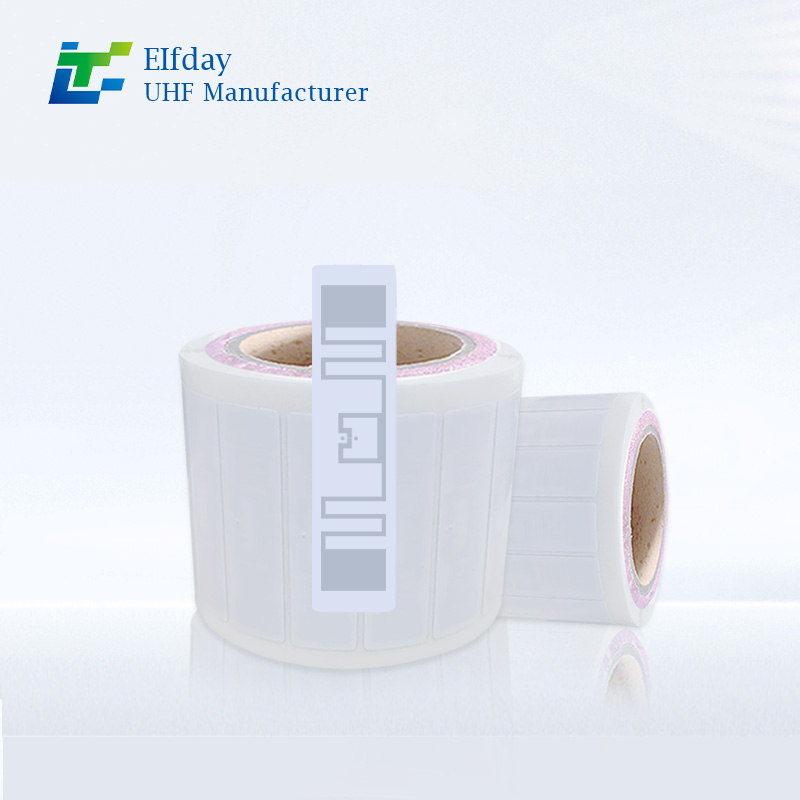
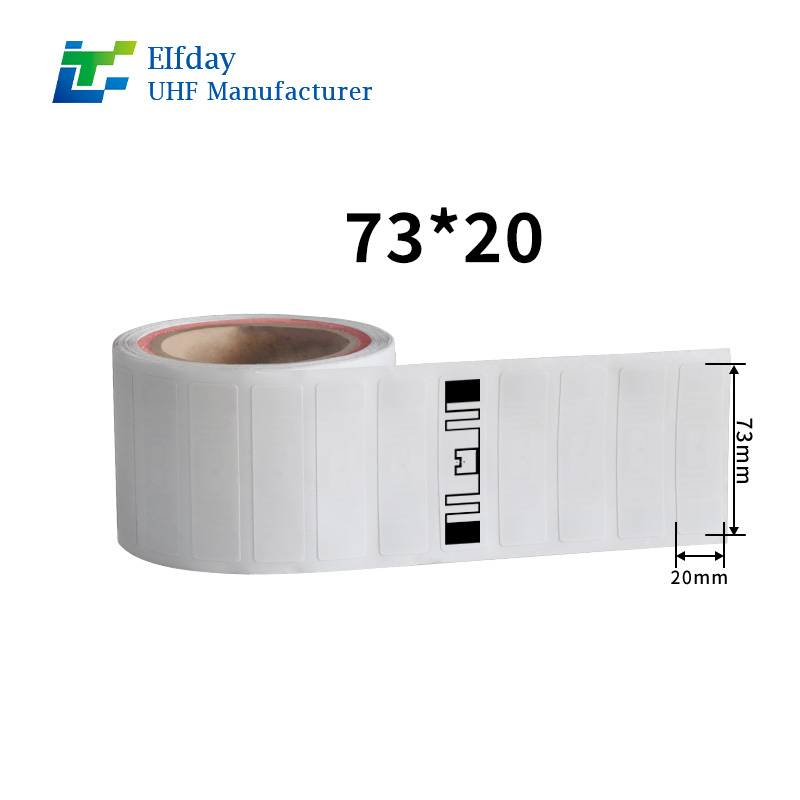
Thin Labels (Flexible): Some modern on-metal tags are thin enough to print with standard label printers . These are great for flat surfaces where aesthetics matter, like IT assets or retail shelving.
Hard Tags (Rugged): For construction equipment, heavy machinery, or outdoor use, you need a UHF RFID tag that can take a beating. Look for materials like 304 stainless steel or reinforced FR4 that withstand vibration, impacts, and extreme weather .
Mounting Options: Will you use industrial adhesive (e.g., 3M VHB tape) or screws? Some rugged tags come with pre-drilled holes for screw mounting, ensuring they stay put even under high vibration . Clean the surface with isopropyl alcohol before applying any adhesive to ensure it lasts .
3. Material Composition: Ferrite vs. Foam
This is the engine under the hood.
Foam-based tags: Inexpensive and effective for indoor use. However, foam can degrade over time in high humidity or temperature swings .
Ferrite-based tags: These use a magnetic substrate that provides excellent isolation and long-term frequency stability. If your assets live outdoors, face high heat/humidity, or require reliability over many years, ferrite-based tags are worth the investment . They resist warping and maintain consistent read sensitivity even after prolonged environmental stress.
4. Environmental Durability (IP Rating)
Industrial environments are brutal. Check the fine print:
Temperature: Can the tag survive a powder-coating oven (200°C+) or a freezing winter (-40°C)? Some high-temp tags are rated for 100+ hours at 300°C .
Moisture and Chemicals: Look for IP67 or IP68 ratings, which mean the tag is dust-tight and can handle immersion in water or exposure to hydraulic fluids and solvents .
Sensor Integration: Newer chips (like Impinj Monza R6 or RFMicron Magnus S2) can actually adapt to surface conditions, adjusting performance if moisture is present .
5. Frequency and Protocol Compatibility
This sounds basic, but it‘s a common mistake.
UHF RFID operates in different frequency bands depending on the region:
US/Canada: 902–928 MHz
EU: 865–868 MHz
Japan: 950–956 MHz
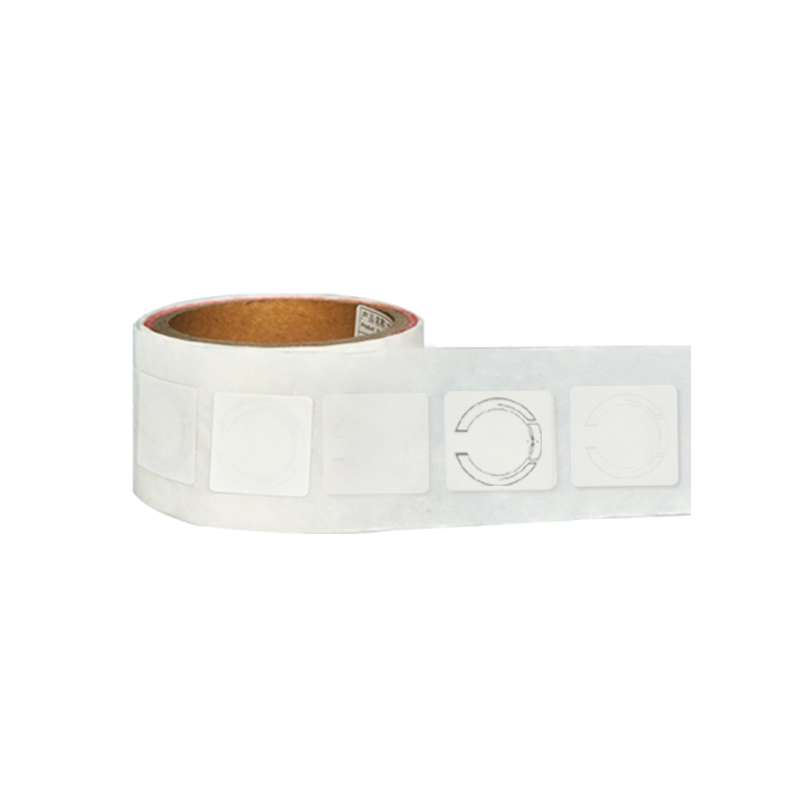
Ensure your chosen UHF RFID tag is tuned for your region‘s frequencies. Most quality tags are broadband enough to work globally, but always verify . Also, stick to the industry standard: EPC Class 1 Gen 2 (ISO 18000-6C) ensures compatibility with almost all modern readers .
Application-Specific Recommendations
Still unsure? Let’s look at common use cases.
For IT Asset Tracking (Servers, Laptops, Racks)
Need: Thin profile, reliable read on flat metal, adhesive mount.
Look for: Thin, flexible on-metal labels that won’t bulge or snag. Prioritize consistent read rates in high-density environments (racks full of servers) .
For Industrial Manufacturing (Automotive Parts, Stillages, Tools)
Need: Ruggedness, heat resistance, reusability.
Look for: Hard tags with screw holes or high-bond adhesive. Some are designed to withstand paint curing processes or harsh chemicals on assembly lines . Ferrite-based construction is ideal here .
For Logistics and Construction (Containers, Heavy Equipment, Gas Cylinders)
Need: Extreme durability, long range, weather resistance.
Look for: Stainless steel housings, IP68 ratings, and wide frequency range. These assets move outdoors and get banged around—your tag needs to survive .
For Small Assets (Surgical Tools, Hand Tools)
Need: Miniature size, precision placement.
Look for: Ultra-compact on-metal tags (some as small as 7mm x 2mm) that can be embedded or attached without affecting tool function .
The “3-Spot” Rule: Testing Before Full Deployment
Before you buy 10,000 tags, test them in your actual environment.
The 5/25 Test:
A simple benchmark used by RFID professionals is to test read rates at 5 feet and 25 feet . Some tags that perform well up close fall apart at distance. If you need forklift gates to read pallets instantly, you need a tag that holds its own at the longer range.
The Proximity Test:
Don’t just test one tag. Test multiple tags placed near each other, and test when the tagged asset is placed on a metal surface (like a truck bed or metal table). Some tags fail miserably when other metal objects are introduced nearby .
The Consistency Check:
Test 10 random tags from the batch. Are they all performing identically? Some manufacturing batches show wide variation, which is a nightmare for system reliability .
Where to Find Reliable UHF RFID Tags for Metal
You need a partner, not just a supplier. Look for companies that provide:
Detailed spec sheets (not just marketing fluff)
Benchmark data or case studies
Samples for testing
Support with integration
At [Your Company Name] , we offer a full range of on-metal UHF RFID tag solutions—from rugged stainless steel tags for oil fields to ultra-thin labels for data centers. All our tags are tested on real metal surfaces and come with full technical support to ensure your deployment succeeds.
👉 [Browse Our On-Metal UHF RFID Tags] or [Contact Our Team] for a free consultation and sample kit.
Choosing the right UHF RFID tag for metal surfaces isn‘t about finding a “magic” product—it‘s about matching the tag’s engineering to your real-world conditions. Prioritize read range stability, durable materials (ferrite over foam when it counts), and environmental sealing.
Remember: The cheapest tag upfront often becomes the most expensive one after you factor in installation labor and read failures. Invest the time to test, ask the right questions, and choose a tag that performs reliably for the life of your asset.
Ready to solve your metal-tracking challenges? [Shop Our On-Metal RFID Tags] or [Download Our Free Buyer‘s Checklist].