








The Role of Anti-Collision Algorithms in Efficient UHF RFID Etiket Systems
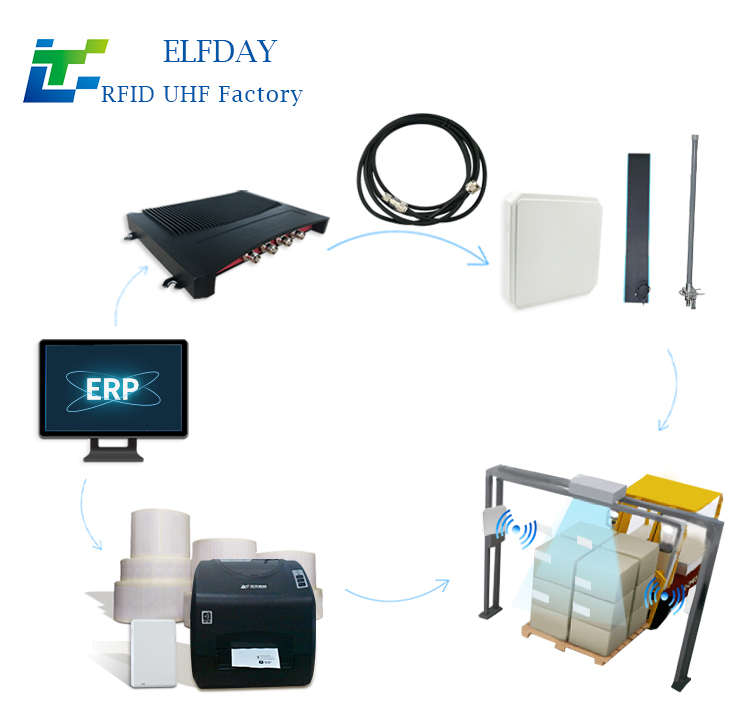
In the fast-paced world of automated identification, efficiency is everything. Picture a busy warehouse dock where a forklift drives through a portal carrying a pallet loaded with 500 individual items. In the ideal scenario, within seconds, every item is scanned, logged into the inventory system, and verified for shipping. But without the right technology, this scenario turns into a logjam of signals, data loss, and frustrated operators.
At the heart of solving this challenge lies a critical piece of engineering: the anti-collision algorithm. For any business relying on UHF RFID tag technology, understanding how these algorithms work is the key to unlocking true operational efficiency. This article explores the role of these algorithms, why they matter for your bottom line, and what to look for when investing in a high-performance RFID system.
What is Tag Collision and Why Does It Matter?
To understand the magic behind the scenes, we first need to understand the problem. When a UHF RFID reader broadcasts a signal, every UHF RFID tag within its field responds simultaneously. Imagine a classroom where a teacher asks a question, and every student shouts the answer at the exact same time. The result is a garbled mess—the teacher (the reader) cannot understand anyone .
This is "tag collision." In technical terms, it occurs when multiple tags try to transmit their data on the same channel at the same time, causing interference and data loss . Without a system to manage this, read rates plummet. Instead of scanning 500 items, the reader might only capture 200. The rest are missed, leading to inventory inaccuracies, shipping errors, and a loss of trust in the system.
For industries relying on dense deployments of UHF RFID tag systems—such as retail inventory, supply chain logistics, or industrial monitoring—solving collision is not optional; it is mandatory .
The Role of Anti-Collision Algorithms: The Air Traffic Controllers
This is where the anti-collision algorithm steps in. Think of it as an air traffic controller for radio waves. Its job is to organize the chaos, ensuring that every tag gets a chance to "speak" to the reader clearly and efficiently.
These algorithms manage how and when tags respond to the reader. Instead of everyone shouting at once, the algorithm orchestrates a conversation. It directs Tag A to respond in the first microsecond, Tag B in the next, and so on, so quickly that to the human eye, it appears instantaneous.
There are two primary families of anti-collision algorithms used in modern systems:
1. Probabilistic Algorithms (ALOHA-based)
These are the most common in UHF RFID systems, particularly those adhering to the EPC Gen2 standard . In this method, the reader divides time into "slots" and tells the tags to pick a random slot to respond.
Dynamic Framed Slotted ALOHA (DFSA) : This is a sophisticated version where the reader listens to the chatter. If it hears too many collisions (too many tags talking in the same slot), it dynamically increases the number of available slots in the next frame. If there are too many empty slots, it shrinks the frame to avoid wasting time . This dynamic adjustment ensures the system operates at peak efficiency regardless of whether there are 10 tags or 1,000 tags.
2. Deterministic Algorithms (Tree-based)
These algorithms are more methodical. When a collision occurs, the reader isolates the colliding tags into smaller and smaller groups (like branches of a tree) until only one tag remains in a group, allowing for clear identification . While highly reliable, these can sometimes be slower than probabilistic methods in dense environments.
The Best of Both Worlds: Hybrid Approaches
Cutting-edge research is now focusing on hybrid models. For example, the Predictive Framed Slotted ALOHA–Collision Tracking Tree (PRFSCT) algorithm combines the speed of ALOHA with the precision of tree-based methods. By predicting the optimal frame length and then using a "tracking tree" to resolve stubborn collisions, these advanced algorithms can drastically reduce the number of wasted time slots .
Performance That Matters: What the Data Shows
When evaluating an RFID solution, the algorithm's efficiency is usually measured in "throughput"—the number of tags successfully identified per time slot.
Standard algorithms can suffer significantly as tag density increases. However, advanced algorithms show remarkable resilience. Recent tests on hardware like the RFM3200 reader with passive tags show that next-gen algorithms like PRFSCT maintain stability even with over 500 tags in the field. In fact, where standard FSA algorithms might require nearly 715 collision slots to sort out 500 tags, advanced hybrid algorithms reduce that number to just 225, dramatically speeding up the read process .
Furthermore, modern readers are achieving throughput rates of 1,000 tags per second or more, thanks to these optimized algorithms . For a business, this means a forklift driver doesn't have to pause and wait for the system to catch up; the work flows continuously.
How This Drives Your Business Efficiency
Why should a logistics manager or a retail buyer care about the technicalities of an algorithm? Because the algorithm directly impacts your purchase decision and ROI.
Higher Read Accuracy: A superior anti-collision algorithm means you can trust your inventory data. Instead of guessing that a pallet contains 100 items, you know it contains 100 items. This eliminates shrinkage and improves order accuracy.
Faster Processing: Time is money. A system that can read 700+ tags per second gets your goods out the door faster . In high-volume distribution centers, shaving seconds off every portal read can translate into hours of labor saved per day.
Reliability in Dense Environments: If you are tagging small items packed closely together (like boxes of pharmaceuticals or piles of clothing), you need an algorithm that can handle the density. Lower-grade algorithms will choke on this environment; high-performance ones excel .
Energy Efficiency: Better algorithms aren't just faster; they can be smarter about power usage. By reducing the number of retries and collisions, the system consumes less energy, which is crucial for handheld or battery-assisted operation .
Choosing the Right UHF RFID Tag and System
When shopping for a UHF RFID tag or a complete reader system, it is vital to look beyond just the price tag. Ask potential vendors about their anti-collision algorithm implementation.
Look for Adaptive Algorithms: Ensure the system uses an adaptive Q-algorithm (as defined in the EPC Gen2 standard) that adjusts frame sizes in real-time based on the tag population .
Check the Collision Read Rate: Some advanced readers boast a "collision read rate" (A). This means that even when tags collide, the reader has a statistical probability (e.g., 30%) of decoding one of them anyway. A reader with a non-zero collision read rate (A > 0) will vastly outperform a basic model in dense tag populations .
Consider the Environment: If you are deploying tags on challenging materials like metal or liquids, or in industrial settings, you need a robust algorithm. High-performance readers can synchronize with antenna arrays to ensure that even weak signals from difficult UHF RFID tag placements are captured .
The Future is Fast and Intelligent
The evolution of anti-collision technology is not slowing down. As we move toward a future with trillions of connected devices, the demand for speed and accuracy will only grow.
We are already seeing the integration of RFID with 5G networks, which will require even more sophisticated collision management to handle massive device counts . Additionally, "smart" tags are on the horizon, which may have the ability to make autonomous decisions about when to transmit, further optimizing the airwaves .
The humble UHF RFID tag is only as effective as the system that reads it. At the core of that system lies the anti-collision algorithm—the silent workhorse that turns a potential cacophony of signals into a symphony of clean data.
For businesses looking to invest in RFID, understanding the role of these algorithms is the first step toward making a smart purchase. By choosing a system with a sophisticated, adaptive anti-collision protocol, you ensure that your operations are not just "automated," but are optimized for speed, accuracy, and growth.
Whether you are managing a supply chain, running a retail store, or monitoring industrial assets, prioritize the technology that keeps your data flowing without collision. Your bottom line will thank you.