










Cut Container Search Time by 80% with Smart RFID Tags
Discover how RFID tags for shipping containers are revolutionizing yard management and putting an end to the costly "needle in a haystack" search for assets.
If you manage a container yard, warehouse, or logistics operation, you know the scene all too well: It‘s peak shipping hours, a truck driver is waiting to pick up a specific container, and your team is scrambling—driving up and down rows, peering at faded box numbers, and wasting precious time. In many yards, this chaotic search consumes up to 35% of operational hours .
But what if you could slash that time by 80%? What if your team knew the exact location of every container instantly, without leaving the office?
This isn't a futuristic dream. It’s the reality for a growing number of logistics hubs adopting RFID tags for shipping containers. By combining rugged RFID technology with smart management systems, companies are transforming their yards from sources of delay into models of efficiency.
In this article, we’ll explore exactly how smart RFID tags eliminate search time, the technology behind the magic, and how you can start reclaiming hours of lost productivity today.
The High Cost of the Hunt
Before we dive into the solution, let‘s look at the problem. Relying on manual methods or even traditional barcodes to locate shipping containers creates a cascade of costly issues:
Idle Labor & Equipment: Workers on forklifts or trucks circling the yard burns fuel and wages without adding value.
Driver Detention: When trucks wait, you pay penalties or risk losing carrier partners.
Demurrage Fees: Missing a container return deadline because you couldn’t find it in time can lead to thousands in fees.
Shipment Delays: In the intermodal world, a missed connection means cargo sits, customers get angry, and relationships suffer.
The root cause? Lack of real-time visibility. You know the container is somewhere in the yard, but you have no live data on its precise location. This is precisely the problem that RFID tags for shipping containers are designed to solve.
How RFID Tags Eliminate the Search
Implementing RFID technology shifts your operation from reactive searching to proactive knowledge. Here’s how it works in a typical container yard environment:
1. The Digital Identity
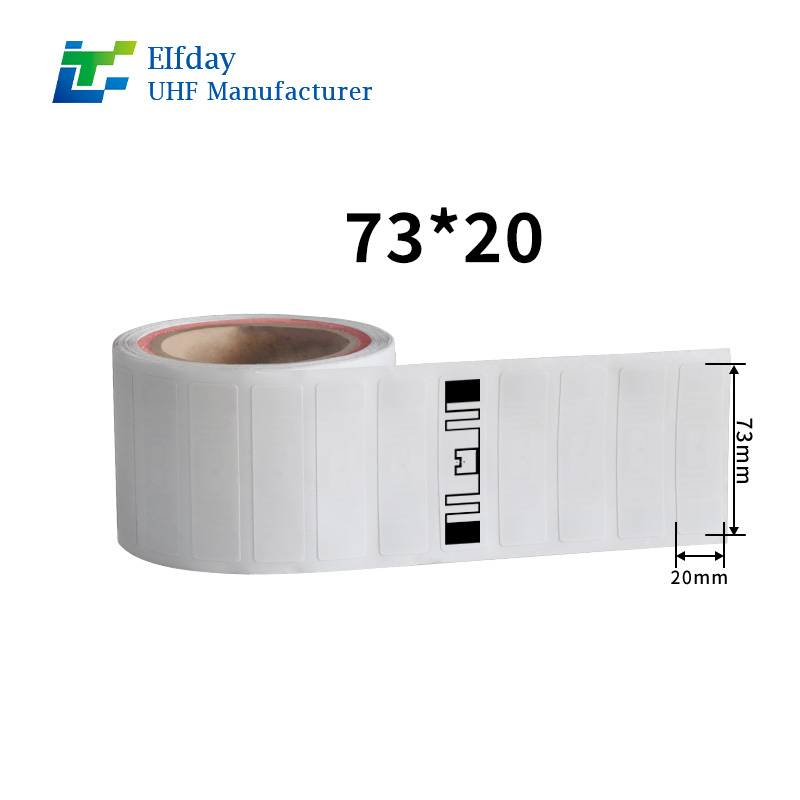
Every shipping container gets fitted with a durable RFID tag. Unlike flimsy paper labels, these tags are engineered to survive the brutal realities of the supply chain. They are:
Weatherproof: Resistant to rain, snow, and extreme UV exposure .
Impact Resistant: Built to withstand the vibrations and shocks of stacking and transport.
Mounting Versatile: Compatible with rivets, screws, cable ties, or heavy-duty adhesives for secure attachment to metal container walls .
These tags store a unique ID linked in your database to all critical info: container number, size, type, contents, owner, and even maintenance history .
2. Automated, Instant Check-Ins
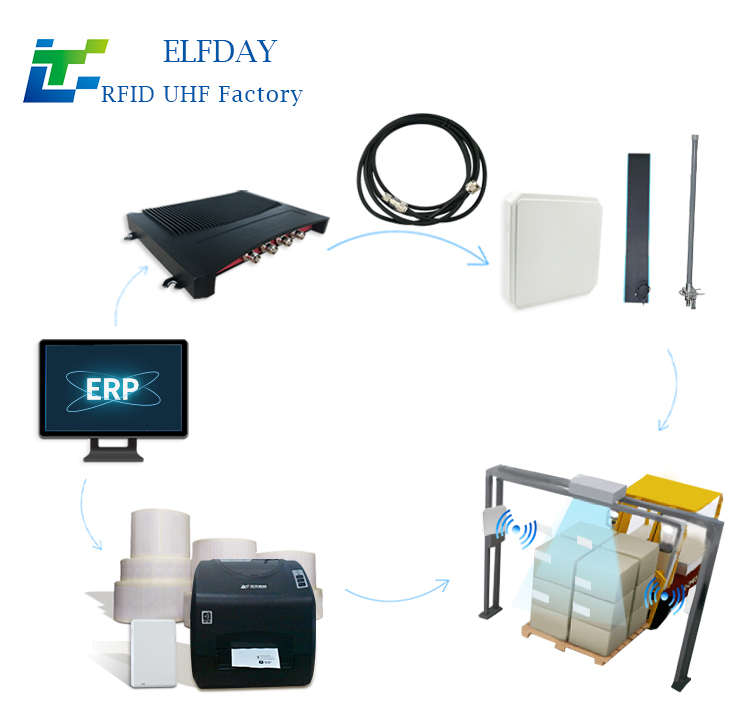
The magic happens at the gate. As a truck carrying a tagged container enters the yard, it passes through a portal equipped with an RFID reader. Within milliseconds, the system:
Automatically captures the container‘s ID .
Cross-references it with your booking system.
Logs the exact entry time and triggers a digital check-in .
The driver doesn’t stop. The clerk doesn‘t type. The data simply appears. This process alone can reduce gate transaction times from minutes to seconds.
3. Real-Time Location Tracking
This is where you cut search time by 80%. As containers are moved within the yard—whether by a forklift, top loader, or reach stacker—they are scanned again. Readers mounted on the equipment capture the tag’s signal the moment the container is lifted. The system then updates the container‘s location in the yard map in real-time .
When a truck arrives for pick-up later, the yard manager doesn’t guess where the container is. They look at a screen displaying a digital map with the exact row and slot. The driver is directed straight to the spot. The hunt is over.
Beyond Location: The Added Benefits
While slashing search time is the headline grabber, the data provided by RFID tags for shipping containers fuels efficiency gains across your entire operation:
Elimination of Manual Errors: Typing mistakes vanish. The system always knows exactly which container is where .
Optimized Yard Space: By knowing exactly where empties are stored, you can consolidate space and maximize capacity.
Enhanced Security: If a container leaves the yard without authorization, the gate readers trigger an instant alert.
Streamlined Billing: Automated gate-in/gate-out records provide indisputable proof for detention and demurrage calculations, eliminating customer disputes.
In fact, logistics operations using RFID have reported reducing loading errors by up to 67% . When you know what’s where, mistakes plummet.
Real-World Proof: It Works at Scale
This isn't theoretical. Major players are proving the value every day.
UPS deployed its “Smart Package Smart Facility” initiative across over 1,000 locations. By integrating RFID technology, they successfully reduced misloads—packages going to the wrong truck—by an astonishing 67% .
Ports and terminals implementing RFID for container tracking have dramatically reduced truck turn times, increasing throughput without expanding physical footprint .
Yard management systems integrated with RFID enable “lights-out” operations where inventory is verified automatically during normal workflows, eliminating dedicated shutdowns for physical counts .
Choosing the Right RFID Tags for Your Containers
To achieve that 80% reduction in search time, you need the right hardware. Not all tags are created equal, especially for the harsh environment of shipping containers. Here’s what to look for:
1. Ruggedization is Non-Negotiable
Your tags must withstand extreme temperatures, salt spray, and physical abuse. Look for tags with high IP ratings (like IP68) that are explicitly designed for outdoor, long-term use .
2. On-Metal Performance
Shipping containers are giant metal boxes, and metal interferes with standard RFID signals. You need on-metal or mount-on-metal RFID tags. These are specially designed with materials that isolate the antenna from the metal surface, ensuring a strong, reliable read .
3. Read Range
Consider your yard layout. Do you need to read tags from a distant gate or only from equipment in close proximity? Some advanced passive tags now offer read ranges up to an incredible 40 meters (131 feet) on metal, allowing for flexible reader placement .
4. Frequency
For container tracking, UHF (Ultra-High Frequency) tags are the industry standard. They offer the long read range and fast, bulk-reading capabilities necessary for logistics .
Is It Time to End the Search?
If your days are still filled with frantic calls of “Where is container ABCU1234567?”, the cost of inaction is mounting daily. Every minute spent searching is a minute stolen from productive work.
Implementing RFID tags for shipping containers is no longer a complex, experimental project. Today’s solutions are designed for simple, out-of-the-box integration with existing warehouse and yard management systems . The ecosystem of experienced partners and integrators means you don’t have to go it alone.
Companies that adopt smart RFID tagging gain a massive competitive advantage through speed, accuracy, and lower operating costs. They stop searching and start scaling.
Ready to cut your container search time and transform your yard into a model of efficiency? [Contact our team today] to discuss the right RFID solution for your specific operation. Let’s put an end to the hunt.