












How RFID Tags for Pallets Improve Warehouse Efficiency by 40%
In today’s fast-paced logistics environment, warehouse efficiency isn’t just a metric—it’s the backbone of profitability. Yet many operations still rely on manual scanning, barcode systems, or outdated inventory methods that create bottlenecks, increase labor costs, and lead to costly errors.
The solution? RFID tags for pallets.
Recent studies show that warehouses implementing RFID technology see efficiency gains of up to 40% —reducing labor hours, eliminating shrinkage, and enabling real-time visibility across the supply chain. In this article, we’ll break down exactly how RFID tags for pallets deliver these results and why upgrading your pallet tracking system is one of the highest-ROI decisions you can make this year.
The Hidden Cost of Traditional Pallet Tracking
Before we dive into the benefits of RFID tags for pallets, it’s important to understand what’s at stake.
Traditional pallet tracking often relies on:
Barcode scanning, which requires line-of-sight and manual labor
Paper-based logs, which are error-prone and delay data entry
Passive visual checks, which offer no real-time visibility
These methods lead to:
2–5% annual inventory shrinkage in large warehouses
Hours of wasted labor per week on manual counts
Lost or misrouted pallets, especially in high-volume distribution centers
RFID tags for pallets eliminate these inefficiencies by automating identification and data capture—without requiring direct line-of-sight.
1. Real-Time Visibility Across the Supply Chain
One of the most powerful advantages of RFID tags for pallets is real-time visibility.
Unlike barcodes, which must be scanned individually, RFID-enabled readers can capture hundreds of pallet tags simultaneously as they pass through dock doors, conveyor belts, or yard gates. This means you always know:
Exactly where each pallet is located
Whether it has entered or exited the facility
How long it has been in a staging area
With this level of visibility, warehouse managers can reduce search time by up to 90% and make faster, more informed decisions about inventory allocation and shipping priorities.
“Before implementing RFID tags for pallets, our team spent nearly three hours a day locating specific pallets. Now, we know the exact location of every pallet in real time.” — Warehouse Operations Manager, Midwest Distribution Center
2. Automated Inventory Counts with Near-Perfect Accuracy
Manual cycle counts are time-consuming and often inaccurate. In contrast, RFID tags for pallets enable automated inventory audits without interrupting operations.
By placing fixed readers at key checkpoints or using handheld readers during shifts, warehouses can:
Complete full inventory counts in minutes instead of days
Achieve 99.9% inventory accuracy
Reduce discrepancies between physical stock and system records
For high-volume operations, this level of accuracy directly translates to fewer stockouts, improved order fulfillment rates, and stronger customer trust.
3. Faster Receiving and Shipping Cycles
Time is money, especially at loading docks. RFID tags for pallets compress the receiving and shipping process by eliminating manual scanning.
When a pallet arrives at a receiving dock equipped with an RFID portal:
The system automatically logs the pallet’s arrival
Updates the Warehouse Management System (WMS) in real time
Flags any discrepancies against purchase orders instantly
Similarly, during outbound shipments, RFID tags for pallets ensure that the right pallets are loaded onto the correct trucks—reducing shipping errors by up to 70% in some deployments.
4. Reduced Labor Costs and Reallocated Resources
Labor is often the largest operating expense in warehousing. By automating data capture with RFID tags for pallets, companies can:
Reduce manual scanning labor by 30–50%
Reassign staff to higher-value tasks like quality control or process improvement
Lower overtime costs associated with year-end inventory counts
One third-party logistics provider reported saving over $200,000 annually after deploying RFID tags for pallets across their top three warehouses—recouping their initial investment in under six months.
5. Loss Prevention and Theft Deterrence
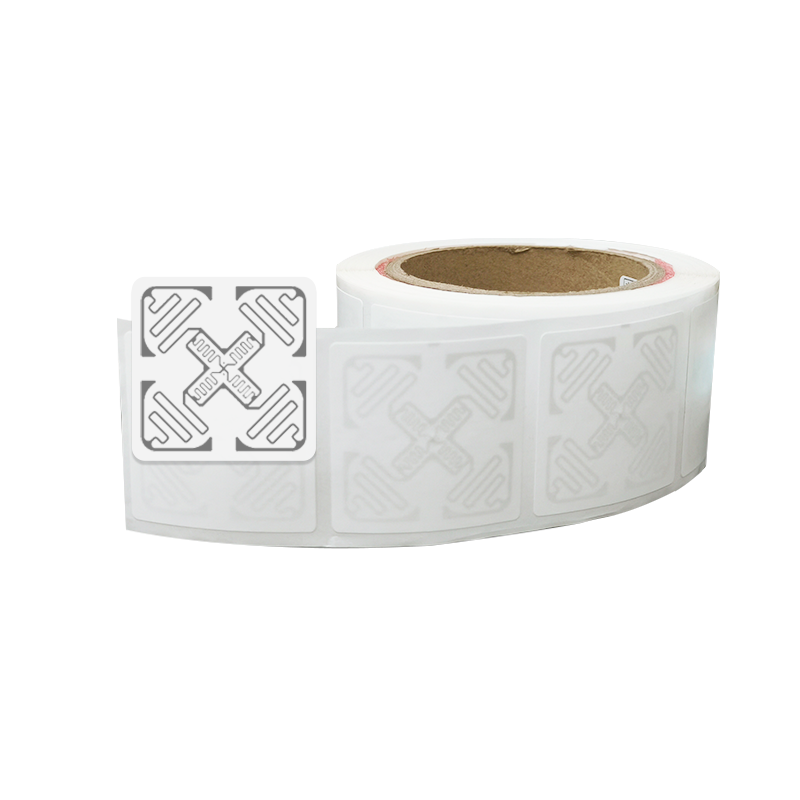
Unidentified movement of pallets often results in lost assets. RFID tags for pallets provide an audit trail for every pallet movement.
With geofencing and exit alerts, managers receive notifications if tagged pallets move through unauthorized exits. This significantly reduces:
Internal theft
Accidental misplacement
Unbilled shipments
For high-value goods—such as electronics, pharmaceuticals, or automotive parts—this layer of security is invaluable.
6. Durable Designs for Harsh Environments
Not all RFID tags for pallets are created equal. The best solutions are built to withstand:
Extreme temperatures (from cold storage to outdoor yards)
Moisture and washdowns
Impact and pressure from forklifts and stacking
Modern RFID tags for pallets are available in rugged, industrial-grade form factors, including:
On-metal tags for metal pallets or racking
Recessed tags for wooden pallets to prevent damage
High-temperature tags for sterilization or oven-based processes
Choosing the right tag type ensures long-term reliability and consistent read rates.
7. Seamless Integration with Existing Systems
One common concern is whether RFID tags for pallets can work with existing warehouse technology. The answer is yes.
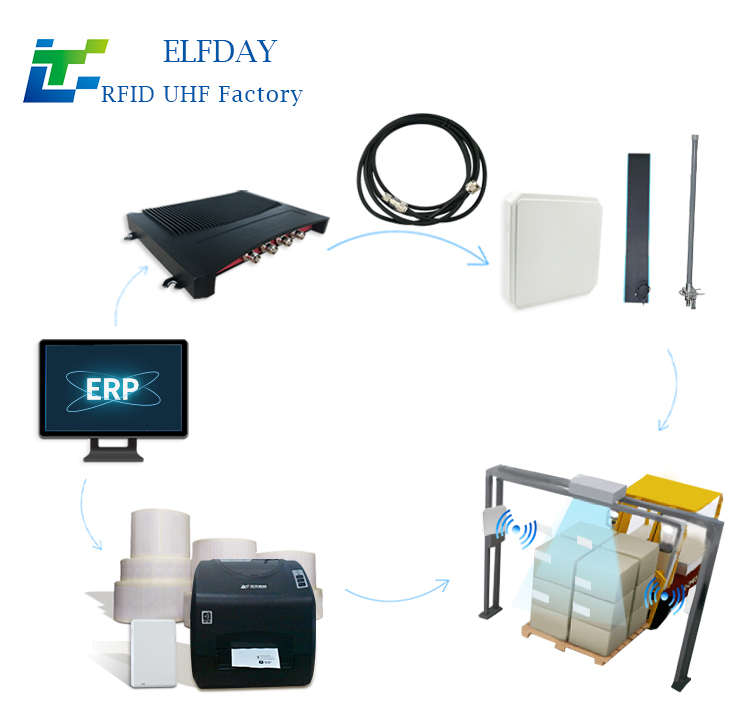
Most RFID tags for pallets comply with UHF Gen2 (RAIN RFID) standards, allowing seamless integration with:
Warehouse Management Systems (WMS)
Enterprise Resource Planning (ERP) platforms
Automated guided vehicles (AGVs) and conveyor systems
Many RFID providers also offer middleware that connects legacy systems to new RFID infrastructure, minimizing disruption during deployment.
8. Measurable ROI: The 40% Efficiency Gain
Let’s revisit the headline number: 40% improvement in warehouse efficiency.
This figure comes from aggregated data across multiple industries, where RFID tags for pallets contributed to:
| Metric | Improvement |
| Labor productivity | +30–50% |
| Inventory accuracy | +25–40% |
| Shipping error rate | -60–80% |
| Time spent locating assets | -80–90% |
These improvements don’t just reduce costs—they also increase throughput capacity without expanding facilities or adding headcount.
Case Study: How One Retailer Cut Dock-to-Stock Time by 60%
A national grocery distributor faced chronic bottlenecks at their receiving docks. Every pallet required manual scanning, leading to long wait times and driver detention fees.
After deploying RFID tags for pallets with overhead portal readers at all dock doors:
Dock-to-stock time dropped from 45 minutes to under 10 minutes
Labor hours at the receiving dock decreased by 35%
Driver turnaround time improved by 50%, reducing detention fees
The project paid for itself in eight months.
Choosing the Right RFID Tags for Pallets
Not all RFID tags for pallets are suitable for every application. To maximize efficiency gains, consider:
Pallet material: Wood, plastic, or metal each require different tag designs
Environment: Indoor vs. outdoor, temperature range, exposure to chemicals
Read range: Short-range portals vs. long-range yard readers
Reusability: One-time use vs. durable tags designed for returnable assets
Working with an experienced RFID provider ensures you select tags that match your operational needs—and avoid costly trial-and-error.
Ready to Transform Your Warehouse?
The data is clear: RFID tags for pallets deliver measurable, repeatable efficiency gains that go straight to the bottom line. From real-time visibility to automated inventory and loss prevention, the technology has matured into a cost-effective solution suitable for warehouses of all sizes.
If you’re ready to explore how RFID tags for pallets can help your operation achieve 40% greater efficiency, our team is here to help.
📞 Contact us today for a free consultation and custom quote tailored to your facility.