








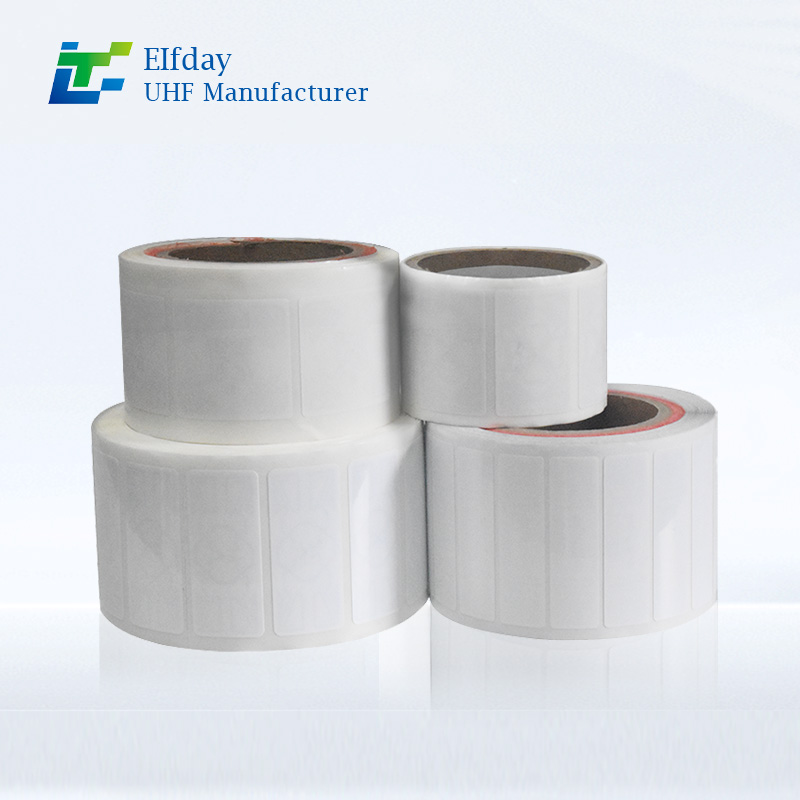
How RFID Tags for Manufacturing Can Slash Your Production Downtime
in the manufacturing world, time is the only currency that truly matters. Every minute a machine sits idle, every hour spent searching for a mislabeled pallet, and every delay caused by inventory discrepancies eats directly into your bottom line. If you are in operations management, you know the frustration well. You’re fighting fires constantly, trying to keep the line moving while dealing with the chaos of manual tracking.
I’ve spent years walking through facilities just like yours. The scene is usually the same—operators shouting across the floor, clipboards hanging on walls, and barcode scanners that only work if the label is perfectly clean and within six inches of the lens. It works, sort of. But it is fragile. And when that system breaks, so does your production schedule.
That is where the shift happens. When manufacturers move beyond traditional identification methods and implement RFID tags for manufacturing, the entire dynamic of the shop floor changes. It isn’t just about knowing where an asset is; it is about eliminating the delays that you didn’t even realize were costing you hours every week.
The Hidden Cost of “Visible” Assets
Let’s look at a typical scenario. You have a high-value asset—a specialized tooling die or a critical engine block—that needs to move from the warehouse to Assembly Line 3. Under a barcode system, that movement requires a stop. Someone has to scan the item out of one location, physically transport it, and then scan it into the new location. If that operator forgets to scan it? The asset vanishes into the system’s void. Now, you have a production supervisor walking around a 200,000-square-foot facility for 45 minutes trying to find a part that is technically “in the system” but physically lost.
With RFID tags for manufacturing, that scenario becomes obsolete. These tags broadcast their location automatically. They don’t require a direct line of sight. They don’t require a human to remember to press a button. They simply report where they are, what condition they are in, and how long they have been there.
Stopping Downtime Before It Starts
One of the most powerful aspects of this technology is predictive visibility. Downtime is usually reactive. A machine breaks, or a part is missing, and you react. But what if you could see the bottleneck forming fifteen minutes before it happens?
Consider work-in-progress tracking. On a complex assembly line, if a chassis or a component fails to arrive at Station 7 on time, the entire line halts until it does. When you utilize RFID tags for manufacturing, you aren’t just tracking the inventory count; you are tracking the flow. The system knows that Component A is at Station 5 and needs to be at Station 7 in eight minutes. If there is a delay, an alert triggers automatically, allowing a material handler to resolve the jam before the line goes red.
This isn’t a theoretical benefit. It’s a fundamental change from reactive management to proactive management. You stop solving problems that have already halted production and start solving problems that are about to halt production.
The Myth of the “Good Enough” Inventory System
I often hear from plant managers that their current system is “good enough.” But when we dig into the numbers, the cracks appear. Cycle counts usually take days. During those days, the data is outdated the moment the count finishes. You end up over-ordering materials you already have in a corner somewhere, or worse, under-ordering critical components because the system says you have 200 units when, in reality, a temporary worker misplaced a pallet three weeks ago.
Using RFID tags for manufacturing turns your inventory into a living, breathing map. You can conduct a full cycle count in minutes without stopping the forklifts. You can set up smart shelves that automatically reorder consumables when they run low. This level of accuracy means no more expedited shipping fees because you thought you were out of a part you actually had all along. It means no more air-freighting $50 sensors at a cost of $500 because of a clerical error.
Making the Operator’s Job Easier
If you want a technology to succeed on the shop floor, it has to make the lives of your operators easier, not harder. If you bring in a system that adds steps to their workflow, they will find ways to circumvent it.
RFID flips that script. Instead of requiring an operator to stop their workflow to scan a barcode, RFID allows them to just move. Imagine a technician walking through a bay with a handheld reader. They can audit an entire rack of assets in seconds without touching anything. In receiving, instead of manually typing in packing slips for a truckload of incoming parts, a portal reader instantly logs the entire shipment as it passes through the dock door.
When you integrate RFID tags for manufacturing into these daily routines, you aren’t adding a task; you are removing a headache. Operators appreciate technology that respects their time. When they aren’t bogged down by data entry, they have more time to focus on quality and throughput. And a motivated workforce is a productive workforce.
Data That Drives Decisions
Beyond the immediate benefit of reducing downtime, there is the long game: optimization. The data collected by these tags is a goldmine. You can analyze exactly how long a product sits in a queue between stations. You can identify which forklift routes are inefficient. You can see exactly which shift has the fastest throughput.
This data allows you to fine-tune your Lean manufacturing initiatives. If you are running a Six Sigma project, hard data on asset movement is invaluable. You stop guessing why a delay happened; you know exactly when, where, and for how long. That visibility is the difference between continuous improvement and just spinning your wheels.
Getting Started Without Disruption
One of the biggest hesitations I see is the fear of implementation downtime. Plant managers worry that installing new infrastructure will require shutting down a line to install readers or reconfigure software. The reality is that a modern RFID implementation is surprisingly non-intrusive.
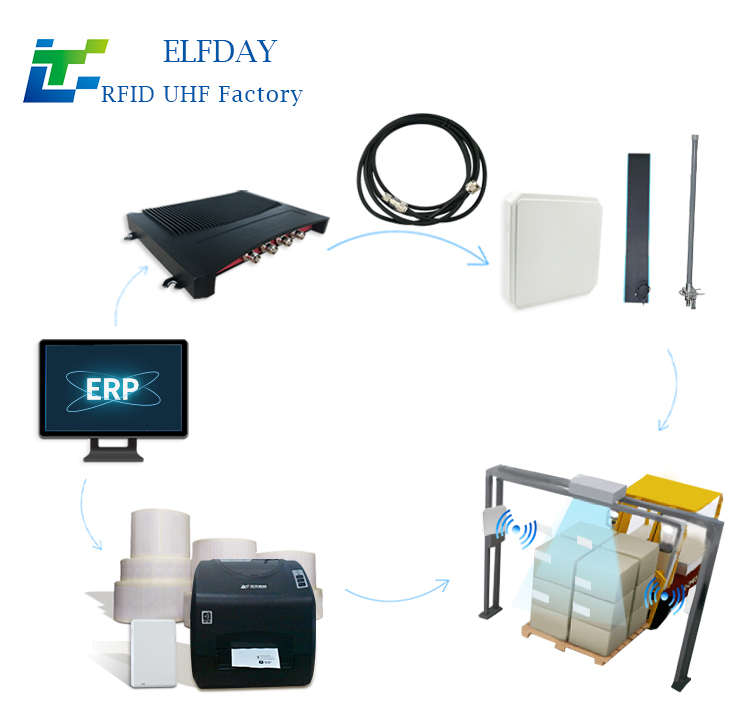
You can start small. Pick a trouble spot—maybe the tool crib, or a specific assembly line that consistently misses its targets. Deploy RFID tags for manufacturing in that specific zone. See the results in the first week. Once the team sees how quickly the ROI materializes, scaling up becomes easy. The infrastructure is flexible. You can use fixed portals for high-traffic areas, handheld readers for cycle counts, and even integrate with existing ERP systems without having to rip out your current software.
Why This Matters for Your Customer
Ultimately, reducing downtime isn’t just about saving your own labor costs. It’s about reliability. In today’s market, your customers expect just-in-time delivery. They don’t care if you had a “barcode error” or a “misplaced pallet.” They care that their order arrives on time.
By ensuring your production floor runs with maximum uptime and minimal friction, you are guaranteeing your ability to deliver on your promises. When you have real-time visibility into every component and asset, you can give your sales team the confidence to promise aggressive lead times, because you know—with certainty—that you have the inventory and the capacity to deliver.
The Bottom Line
If you look at your production floor right now, there are small leaks of time everywhere. Ten minutes here to find a tool. Twenty minutes there to reconcile a shipment. A thirty-minute line stop because a quality check wasn’t logged properly. These minutes add up to hours, and hours add up to thousands of dollars in lost output.
Implementing RFID tags for manufacturing is one of the fastest ways to plug those leaks. It provides a level of visibility that simply cannot be achieved with manual processes or outdated barcode systems. It empowers your workforce, provides the data you need to optimize your workflows, and most importantly, keeps the line moving.
If you are tired of firefighting and ready to take control of your production schedule, it’s time to look at RFID not as a cost, but as the most effective insurance policy against downtime you can buy. The technology is mature, the implementation is straightforward, and the return on investment is measured in days, not years.
Take a look at your most problematic workflow today. The one that causes the most overtime or the most stress. Ask yourself: what would it be worth if that problem simply disappeared? For most manufacturers, the answer is that the technology pays for itself on the very first day it prevents a major line stoppage. That is the power of knowing exactly what you have, and exactly where it is, at every single moment.