








Why UHF RFID Tags Offer Superior Long-Range Performance
If you have spent any time looking into asset tracking or inventory management, you have probably come across different types of RFID—low frequency (LF), high frequency (HF), and ultra-high frequency (UHF). And you have likely seen the term “long range RFID tag” thrown around a lot. But here is the question that actually matters: which technology gives you real, usable range without breaking the bank?
The short answer is UHF. And in this article, I am going to explain exactly why UHF RFID tags consistently outperform LF and HF when you need to read tags from a distance. No hype. No confusing jargon. Just the practical reasons that make a long range RFID tag built on UHF the right tool for most warehouses, logistics operations, and industrial tracking jobs.
What makes UHF different from LF and HF?
To understand why UHF wins on range, you first need to know a little about how radio waves behave at different frequencies.
Low frequency RFID operates around 125–134 kHz. These waves travel well through water and metal, which is why LF tags are often used for animal tracking and car key fobs. But LF has a major drawback—its data rate is very slow, and the magnetic field it creates drops off quickly. Even with a large antenna, a typical LF tag can only be read from a few inches to maybe a foot away. That is not what anyone would call a long range RFID tag.
High frequency RFID runs at 13.56 MHz. This is the same frequency used by NFC in your phone for contactless payments. HF offers faster data transfer than LF and works well at distances up to about three feet. Some specialized HF readers can push that to four or five feet, but that is the practical limit. Beyond that, the signal becomes too weak to power a passive tag reliably.
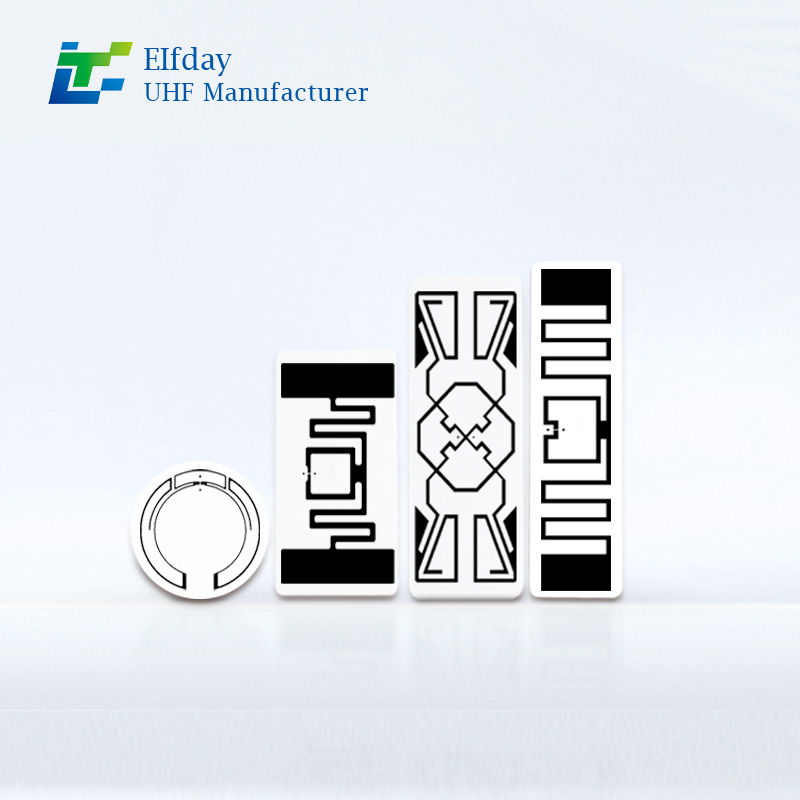
UHF RFID operates between 860 and 960 MHz, depending on your region. That is a much higher frequency than LF or HF. Higher frequency waves can carry more energy and support much faster communication. More importantly, UHF antennas can be designed to focus that energy into a directional beam, which is something LF and HF simply cannot do. This combination of higher power and better antenna design is what allows a UHF based long range RFID tag to be read from 30, 50, or even 100 feet away under good conditions.
The physics of range: why UHF just works better
Let me get a little technical for a moment, but I promise to keep it simple.
Every passive RFID tag—whether LF, HF, or UHF—works by harvesting energy from the reader’s signal. The tag’s antenna captures that energy, powers up the chip, and then the chip sends back its unique ID. The further you move the tag from the reader, the less energy the tag receives. At some point, there is not enough energy to wake up the chip, and you lose the read.
The key difference between frequencies is how efficiently the tag can capture that energy at a given distance. UHF tags operate in what engineers call the “far field.” That means the radio waves have separated from the reader’s antenna and are traveling through space like a beam of light. A well-designed UHF tag antenna can act like a small reflector, grabbing those waves and converting them into usable power.
LF and HF tags, on the other hand, operate in the “near field.” They rely on magnetic induction rather than propagating radio waves. The magnetic field strength drops off at a rate of distance cubed, which is much faster than the drop-off rate for UHF. In plain English, that means LF and HF signals become too weak to power a tag very quickly as distance increases. UHF simply does not suffer from that limitation in the same way.
This is not just theory. Walk onto any real-world warehouse floor where a long range RFID tag system is running, and you will see the difference immediately. A worker with a UHF handheld reader can stand at the end of a 40-foot aisle and count every tagged pallet on both sides. Try that with HF, and you would have to walk down the aisle and wave the reader within a foot or two of each pallet. The productivity gap is enormous.
How UHF antennas give you flexibility LF and HF cannot match
Another reason UHF dominates long range applications is antenna design. With LF and HF, the reader antenna usually has to be a coil that creates a magnetic field in a relatively small area. You can make the coil bigger, but that makes the reader bulky and expensive, and you still cannot shape the field very much.
With UHF, you have options. You can use a small patch antenna that covers a specific zone. You can use a large panel antenna that projects a focused beam down a long corridor. You can even use a circular polarized antenna that reads tags no matter how they are oriented, which is incredibly useful when items are moving quickly on a conveyor.
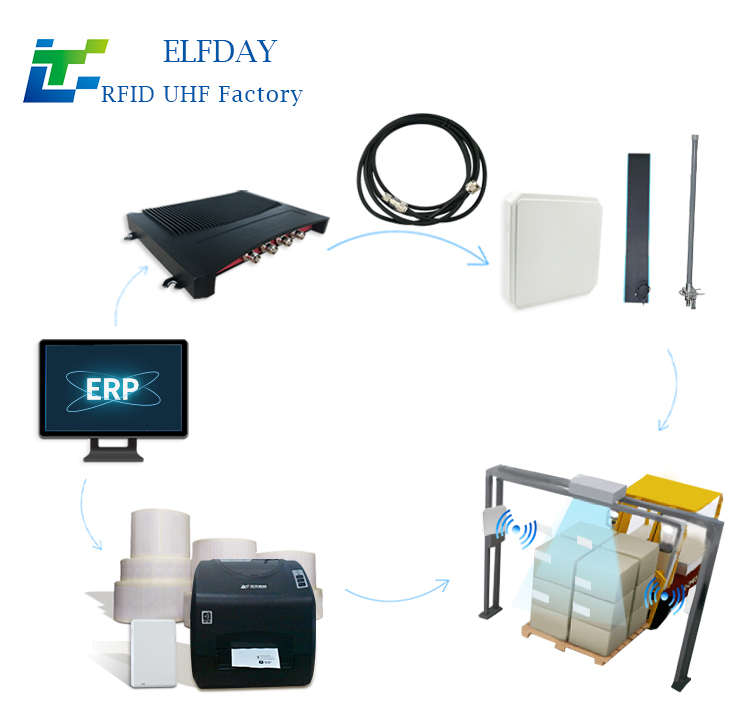
Because UHF readers can support different antenna types, you can design a system that fits your exact space. Need to read tags as forklifts pass through a 15-foot-wide doorway? Mount two panel antennas and you are done. Need to read tags on a 60-foot-long assembly line? A couple of linearly polarized antennas along the line will do the job. That kind of flexibility is simply not available with LF or HF.
But what about interference from metal and liquids?
Now, I can already hear what some of you are thinking. “Everyone says UHF struggles with metal and water. So how is it superior?”
Fair question. UHF signals do reflect off metal and get absorbed by water. That is a real challenge. But here is the thing—engineers have figured out how to work around it. Specialized on-metal UHF tags use a design that isolates the antenna from the metal surface or even uses the metal as part of the antenna. These tags can achieve excellent read range even when mounted directly on a steel beam or an aluminum container.
For liquids, similar solutions exist. Tags designed for liquid-filled bottles or IV bags use foam spacers and specific antenna patterns to maintain performance. Yes, you have to choose the right tag for the job. But that is true for any technology. A standard UHF label will fail on a metal drum. A properly selected on-metal long range RFID tag will read just fine.
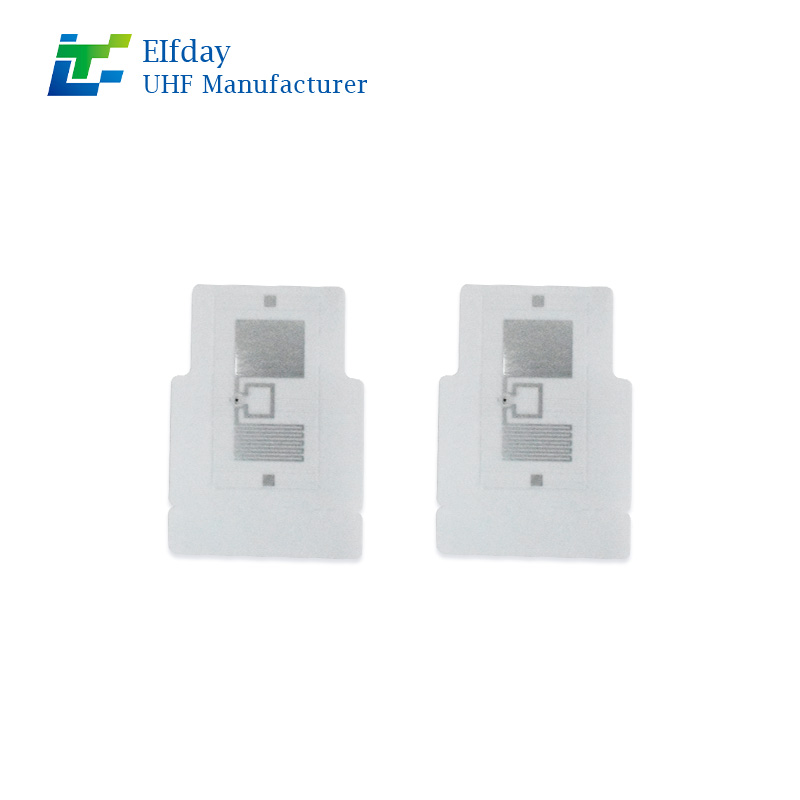
Compare that to LF or HF. While they are less affected by metal and water, their range is so short that you have to bring the reader almost touching the tag anyway. So what is the advantage? With UHF, you have to solve the material challenge once by picking the right tag, and then you get long range forever. With LF or HF, you avoid the material challenge but you are stuck with short range forever. For most industrial users, long range is worth the small extra effort of selecting the right tag type.
Real-world reasons why UHF is the standard for long range
Walk into any modern distribution center for a major retailer like Walmart, Target, or Amazon. What RFID technology are they using? Almost without exception, it is UHF. These companies have done the math, run the pilots, and scaled up what works. They need to read hundreds of tags per second from several feet away as pallets move through receiving doors. Only UHF can do that reliably and cost-effectively.
Look at vehicle access control. Toll roads, parking garages, and gated communities that use windshield tags are almost always using UHF. The reader mounted above the lane reads the tag from 10 to 30 feet away as the vehicle drives through at normal speed. No stopping, no rolling down windows. LF and HF simply cannot deliver that kind of convenience.
Consider returnable container tracking. Plastic totes and metal cages that move between factories and warehouses. Companies attach a rugged long range RFID tag to each container. As a forklift carries a stack of containers through a portal, a UHF reader captures every tag in the stack simultaneously. That is impossible with short-range technologies.
What this means for your business
If you are reading this, you are probably trying to decide what kind of RFID system to invest in. Let me save you some time and money.
If you need to track items that are more than three feet away from your reader—and especially if you want to read multiple tags at once—you need a UHF based long range RFID tag. LF and HF will disappoint you. They are great for specific jobs like animal ID or secure access control at a single door. But for warehouse inventory, logistics, asset tracking across large areas, or anything involving moving vehicles, UHF is the only practical choice.
Do not let someone sell you an HF system for a job that needs real range. You will end up spending more on readers and antennas trying to compensate for the fundamental physics disadvantage. Start with UHF. Choose tags that match your environment—standard labels for cardboard, on-metal tags for metal assets, rugged tags for outdoor use. Pair them with a decent reader and proper antennas. Then watch your inventory accuracy climb and your labor hours drop.
That is the real promise of a long range RFID tag. Not just reading from farther away, but working faster, reducing errors, and giving you visibility you never had before. And UHF is how you get there.