








How to Choose RFID Bag Tags That Work on Metal Suitcases
You have probably seen it happen before. A traveler checks in a sleek aluminum suitcase, only to land at their destination and find that the bag never made it. Or worse, the luggage tracking system shows no update after the transfer point. The problem often is not the RFID system itself—it is the wrong type of tag being used on metal luggage.
If you are in the business of baggage tracking, airline operations, or logistics, you already know that RFID bag tags can cut mishandling rates dramatically. But here is the catch. Standard RFID bag tags simply do not work well on metal surfaces. Metal suitcases, aluminum hard shells, and even metal-reinforced travel trunks can block or scramble the signal, turning a smart tracking solution into a very expensive piece of plastic.
So how do you choose RFID bag tags that actually work on metal luggage? Let us walk through what you need to know, what to look for, and how to avoid costly mistakes.
Why Metal Suitcases Are a Problem for Standard RFID Bag Tags
Before we get into the solution, it helps to understand why metal causes trouble in the first place. Standard RFID bag tags are usually designed with simple dipole antennas. They work fine on fabric, plastic, and cardboard. But metal changes everything.
When an RFID bag tag is placed directly onto a metal surface, the metal reflects the reader‘s signal like a mirror. That reflection interferes with the original signal, creating something engineers call a standing wave. The result is that the tag either struggles to communicate or stops working entirely. You can be standing right next to the bag with a powerful reader, and nothing happens.
Beyond signal reflection, there is also a problem called detuning. Metal alters the electromagnetic field around the tag antenna, causing it to drift off its designed frequency. The tag might still technically be alive, but the reader cannot hear it. Some ordinary RFID bag tags can lose up to 60 percent of their signal strength when placed on metal.
This is not just a minor technical issue. For airlines and logistics providers, it means baggage that appears invisible in the system. Bags get misrouted. Passengers get frustrated. And the entire investment in RFID tracking goes to waste if the tags cannot perform consistently across every type of luggage.
What Makes a Bag Tag Work on Metal Surfaces
The good news is that not all RFID bag tags behave the same way. Certain tags are specifically engineered to work on metal, and the difference comes down to three key design features.
The first and most important is isolation. Anti-metal RFID bag tags include a special layer between the tag antenna and the metal surface. This layer acts like a barrier, blocking the reflective interference that would otherwise scramble the signal. Common isolation materials include ceramic, ferrite absorber sheets, and specially formulated foam. When you see a tag described as on-metal or anti-metal, it almost always means it has this isolation built in.
The second feature is antenna design. Instead of a simple dipole, anti-metal RFID bag tags often use a microstrip or patch antenna structure. This design actually takes advantage of the metal surface as part of the antenna system. In simple terms, the tag and the suitcase work together rather than fighting each other. That is why a well-designed RFID bag tag can sometimes achieve even better read range on metal than in free air.
The third feature is tuning. The best RFID bag tags are factory-tuned to operate on metal. The chip and antenna are calibrated specifically for that use case, so there is no drop-off in performance when the tag meets the suitcase.
What to Look for When Choosing RFID Bag Tags for Metal Luggage
Now that you understand the basic technology, let us talk about the practical checklist. When you are sourcing RFID bag tags for metal suitcases, there are several things you need to examine closely.
Read Range on Metal
Do not assume that a tag’s advertised read range applies to metal surfaces. Many standard RFID bag tags claim long range, but those numbers are usually measured in open air on non-metallic materials. Ask the supplier specifically for read range on metal. A good anti-metal RFID bag tag should maintain at least 70 to 80 percent of its free-air performance when mounted directly onto aluminum or steel. Some high-quality options can read from eight meters or more even when attached to metal.
Tag Thickness and Form Factor
Anti-metal tags tend to be thicker than standard ones because of the isolation layer. You will find options ranging from about one millimeter up to five millimeters. For baggage tracking, thinner is usually better for ease of handling and printing, but do not sacrifice performance for a slimmer profile. A good balance is around two to three millimeters—thick enough to block interference but not so bulky that it causes handling issues.
Material and Durability
Luggage takes a beating. Bags get thrown onto conveyors, stacked under other suitcases, exposed to rain, and left in freezing cargo holds or blazing hot tarmacs. Your RFID bag tags need to survive all of that. Look for tags with an IP67 or higher waterproof rating. That means they can handle being submerged in water and will resist dust and dirt. Operating temperature range is also critical. A good RFID bag tag for luggage should work from at least -20 to 70 degrees Celsius, and preferably wider. Many quality options can handle -40 to 85 degrees.
For the tag body itself, you will see materials like ABS plastic, PET, epoxy resin, and flexible polyurethane. ABS is tough and impact-resistant, making it a good choice for reusable tags. PET is more flexible and works well for printable disposable tags, though it is less durable over the long term.
Chip Selection
The chip inside matters more than most people realize. You will encounter two main players in the UHF RFID space: Impinj and NXP. Both make excellent chips, but they have different strengths. Impinj chips like the Monza series are known for high sensitivity and fast inventory speeds, which can be useful in high-volume baggage sorting environments. NXP chips like the UCODE series often feature adaptive tuning capabilities that help maintain performance when conditions change. For RFID bag tags on metal suitcases, NXP’s UCODE series with self-adjust features can be a smart choice because the chip actively works to maintain the best possible signal.
Compliance with Standards
If your RFID bag tags are intended for airline use, you need to pay attention to IATA Resolution 753. This resolution requires baggage tracking at four critical points: acceptance, loading, transfer, and arrival. Currently, about 44 percent of airlines have fully implemented Resolution 753 tracking, and another 41 percent are in progress. That number is only going to rise. Your RFID bag tags should be compatible with the UHF RFID readers used in major airports and compliant with ISO 18000-6C (EPC Gen2) standards. Otherwise, your tags may not work with the infrastructure already in place.
Two Common Types of RFID Bag Tags for Metal Suitcases
When shopping for RFID bag tags that work on metal, you will mostly encounter two categories.
The first is rigid anti-metal tags. These are usually made of ABS or FR-4 fiberglass with a built-in isolation layer. They are rugged, reusable, and can be attached with adhesive, screws, or zip ties. These are ideal for permanent asset tracking on metal luggage that stays within a closed system—think rental suitcases, corporate travel trunks, or equipment cases. They are not cheap, but they last for years.
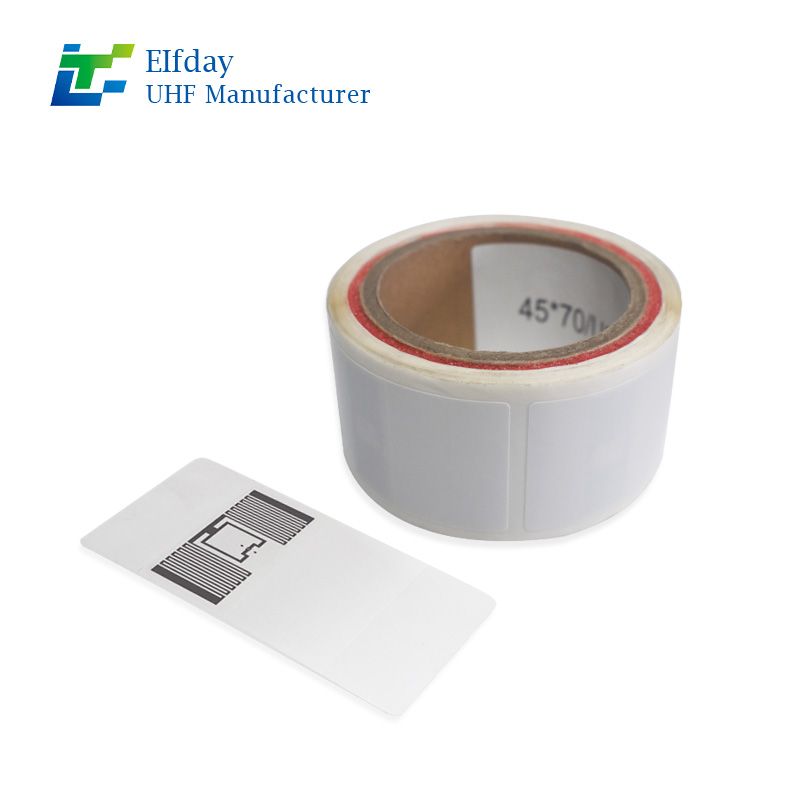
The second is on-metal printable tags. These are thinner and more flexible, designed to be printed on demand at check-in counters. They incorporate a thin isolation layer that allows them to function on metal while still being light enough to attach to a luggage handle. These are what most airlines will use for passenger baggage, because they combine the benefits of RFID with the convenience of traditional printed tags.
Where You Will Actually Use These RFID Bag Tags
The need for metal-compatible RFID bag tags shows up in several real-world scenarios.
In airport baggage handling, metal suitcases and aluminum hard shells have become increasingly popular. Without the right RFID bag tags, those bags become invisible to automated sorting systems. That leads to misrouting, delays, and lost luggage claims. With proper on-metal tags, every bag—metal or not—gets tracked consistently from check-in to claim.
In corporate logistics and high-value shipments, many cargo containers and equipment cases are metal. RFID bag tags that work on metal allow logistics providers to track these assets automatically, eliminating manual scanning and reducing theft or loss.
In the travel industry, some tour operators and cruise lines issue reusable RFID bag tags to their customers. These tags need to work on any luggage type, including metal suitcases, so that the company can track bags from hotel pickup to ship delivery without exceptions.
How to Avoid Common Mistakes When Buying RFID Bag Tags
Let me save you some trouble. The most common mistake buyers make is assuming all RFID bag tags are basically the same. They are not. Buying standard tags and hoping they work on your metal suitcases is a recipe for disappointment.
Another mistake is prioritizing low cost over performance. Cheap tags cut corners on isolation materials and chip quality. They might work in a test on a desk, but they will fail in a real baggage hall with conveyors running, readers moving, and bags stacked together. Spend a little more upfront on proper on-metal tags, and you will save much more on operational headaches later.
Also, do not skip testing. Before you commit to a large purchase, get samples. Attach them to the actual metal suitcases you use. Run them through your readers in conditions that mimic real operations. Check the read rate, the range, and how the tags hold up after being handled a few times. A good supplier will provide samples and work with you to validate performance.
Why Investing in the Right RFID Bag Tags Pays Off
The numbers speak for themselves. IATA has reported that initial RFID deployments achieved a 60 percent reduction in mishandled baggage through improved tracking accuracy. That is not just about happier passengers—though that matters a great deal. It is also about real money. Mishandled bags cost airlines hundreds of millions of dollars every year, not to mention the damage to brand reputation.
For airlines, airports, and logistics companies, the choice of RFID bag tags is not a minor technical detail. It is a strategic decision that affects operational efficiency, customer satisfaction, and the bottom line. Metal suitcases are here to stay. Travelers love them for their durability and sleek look. That means your RFID bag tags have to handle them properly.
The right tags make your system work. The wrong ones make your system look broken. Choose wisely.
Final Thoughts
Selecting RFID bag tags that work on metal suitcases does not have to be complicated, but it does require asking the right questions. Look for tags with proper isolation layers. Check the read range on metal specifically, not just in open air. Verify the chip and material quality. And always test before you buy at scale.
Whether you are outfitting an airline baggage operation, managing a corporate travel program, or building a logistics tracking system, the principle is the same: if your tags fail on metal, your whole tracking system fails. But when you choose the right RFID bag tags, you get reliable visibility from check-in to claim, fewer lost bags, and a smoother journey for everyone involved.
So take the time to get it right. Your passengers will thank you. And so will your operations team.