








How to Choose the Right RFID Tags for Food Tracking Systems
If you work in the food industry—whether you run a busy cold storage warehouse, manage a national supply chain, or oversee quality control for a fresh produce company—you already know how quickly things can go wrong. A few hours of temperature abuse, a mix-up in inventory, or a recall that takes days to trace back to its source can cost millions. More importantly, it can cost your customers’ trust.
That is where RFID tags for food tracking come into play. They offer something barcodes and manual logs simply cannot: real-time visibility, accuracy at scale, and the ability to track every single item from the moment it leaves the farm or production line until it reaches the end customer.
But here is the challenge—not all RFID tags are created equal. Choosing the wrong tag can lead to read failures, lost data, and a system that frustrates your team instead of helping them. So, how do you pick the right one?
Let’s walk through the key decisions you will need to make, without the technical jargon overload. By the end, you should feel confident about what to look for and what questions to ask before you invest.
Start with Your Environment
Before you look at any product specs, take a step back and think about where your tags will actually live. Food tracking happens in some of the harshest environments in the supply chain.
Are your tags going to be attached to cardboard boxes sitting in a dry, room-temperature warehouse? Or will they be stuck directly onto metal cans of soup going through a high-heat retort process? Maybe they need to survive freezer storage at negative twenty degrees, or endure repeated washdowns in a meat processing facility.
This is the single most important factor in choosing RFID tags for food tracking. A tag that works perfectly on a case of dry pasta will fail within hours if it is submerged in icy water or exposed to steam. So start by listing your extremes: temperature ranges, moisture exposure, physical impacts, and the surfaces the tags will attach to.
If your application involves frozen goods, for example, you will want tags specifically rated for cryogenic temperatures. The adhesive matters as much as the chip itself. Some adhesives turn brittle in freezing conditions and the tag simply falls off. Others are designed to stay flexible and maintain a strong bond even in sub-zero environments.
For high-moisture or washdown areas, look for tags with a high IP rating—IP67 or IP68 is common for food processing. These tags can handle being hosed down, submerged in cleaning solutions, and still transmit reliably.
Frequency Matters More Than You Think
When people new to RFID start researching tags, they often overlook frequency. But frequency determines how far you can read a tag, how it performs near liquids or metal, and how the tag interacts with your overall system.
There are two main types you will encounter for food tracking: High Frequency (HF) and Ultra-High Frequency (UHF).
HF tags, including the popular NFC variety, are great for close-range reading. If your goal is to have someone walk up to a pallet with a handheld reader and capture a single tag from a few inches away, HF works well. They also tend to perform better around liquids compared to some UHF options. You will often see HF used for item-level tracking where precise, one-by-one reads matter.
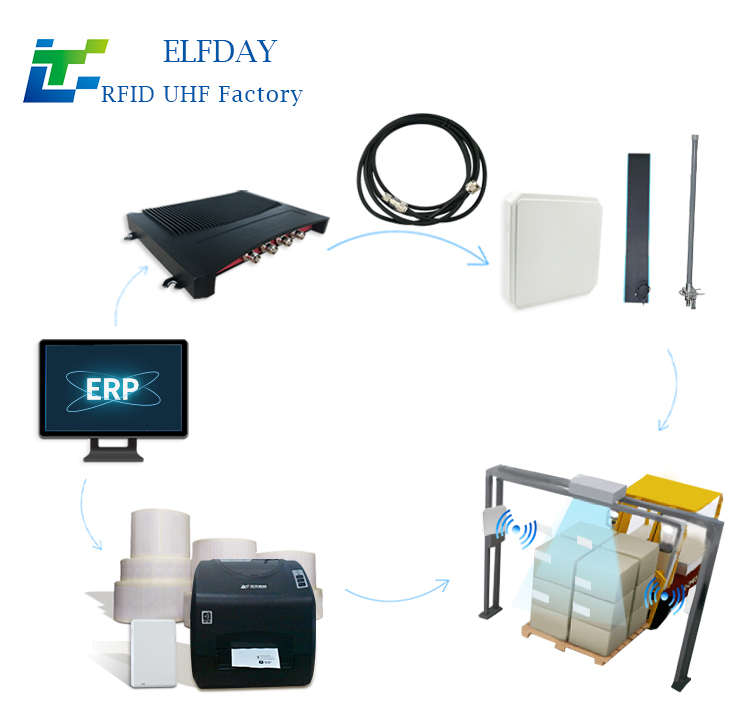
UHF tags are the workhorses of supply chain logistics. They offer much longer read ranges—sometimes up to thirty feet or more with the right reader and antenna setup. This allows for bulk reading: you can drive a forklift with a mounted reader through a dock door and instantly capture every tag on a pallet without stopping.
For most food tracking operations that involve moving large volumes through gates, conveyors, or warehouse aisles, UHF is the go-to choice. However, if your products are high-liquid content—think bottled beverages or bagged produce—you may need UHF tags specifically designed for “on-metal” or “near-liquid” use, because liquids absorb UHF signals. Some manufacturers offer tags with special substrates that detune the antenna to compensate for that absorption.
Surface and Attachment Are Deal-Breakers
One of the most common mistakes we see businesses make is assuming that one tag type will work on every surface. It rarely does.
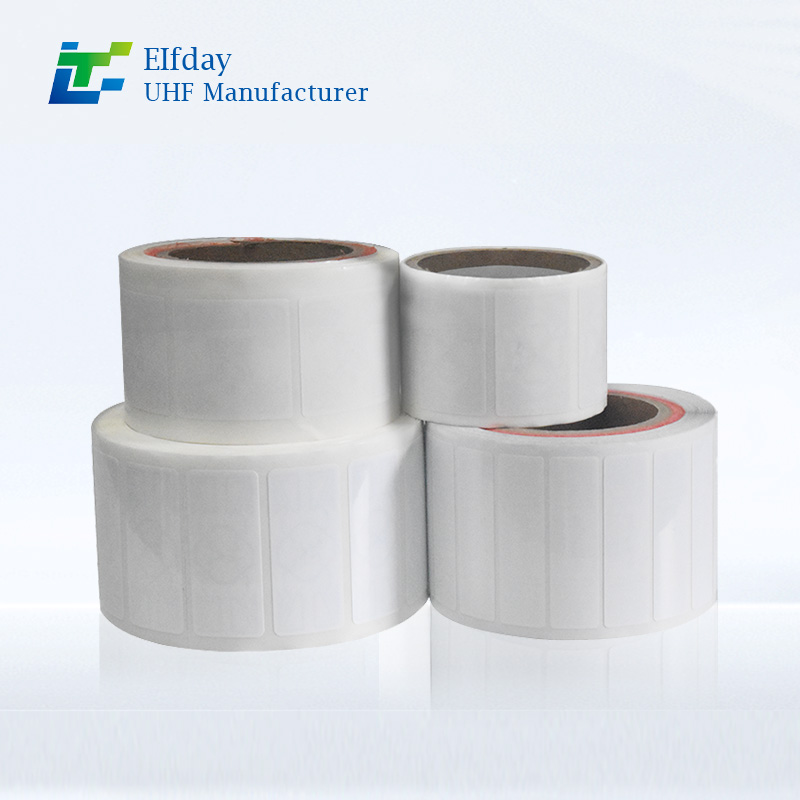
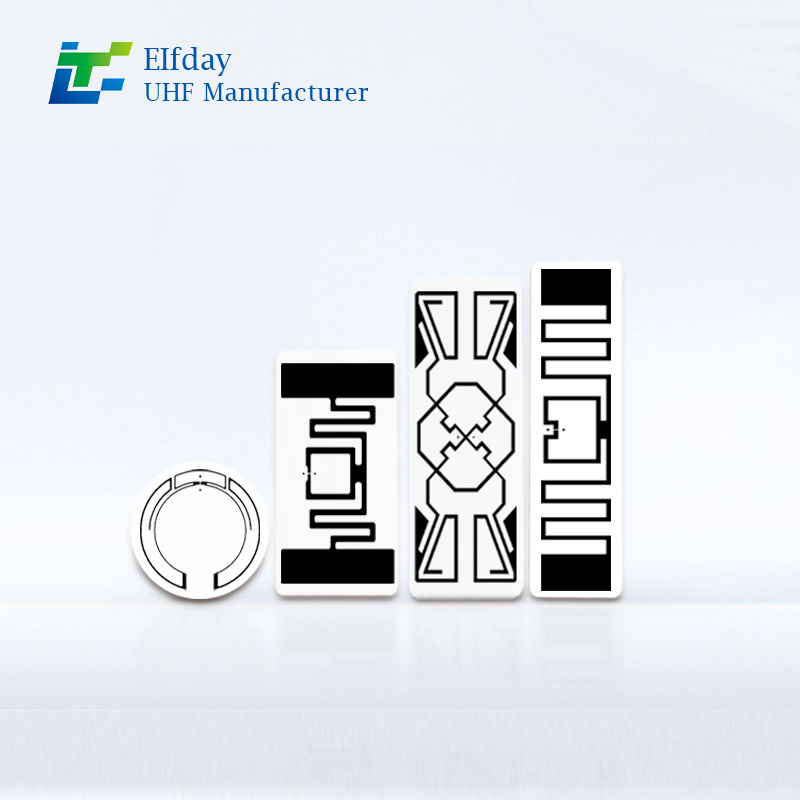
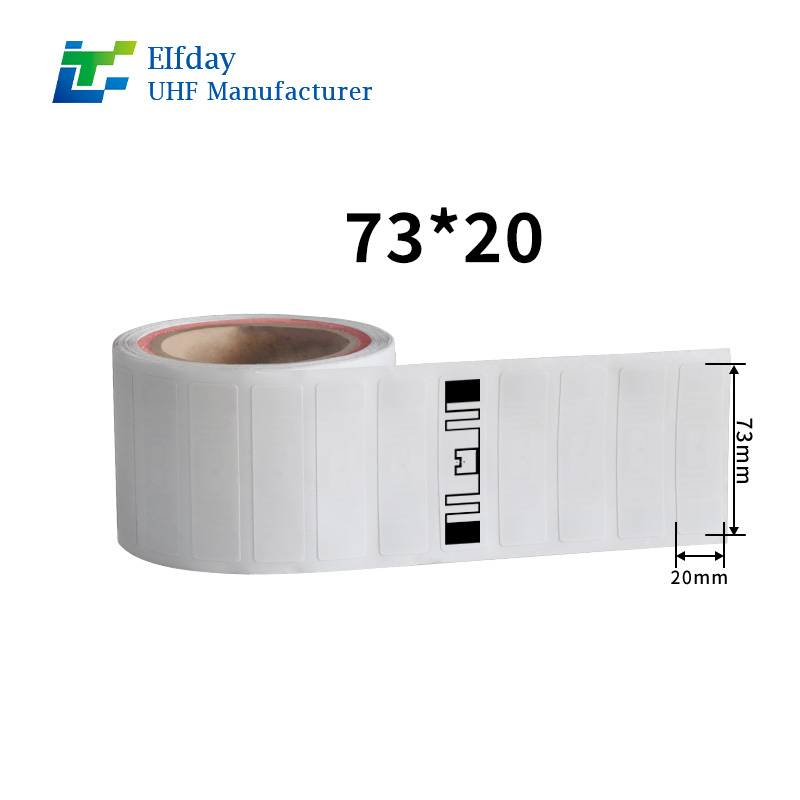
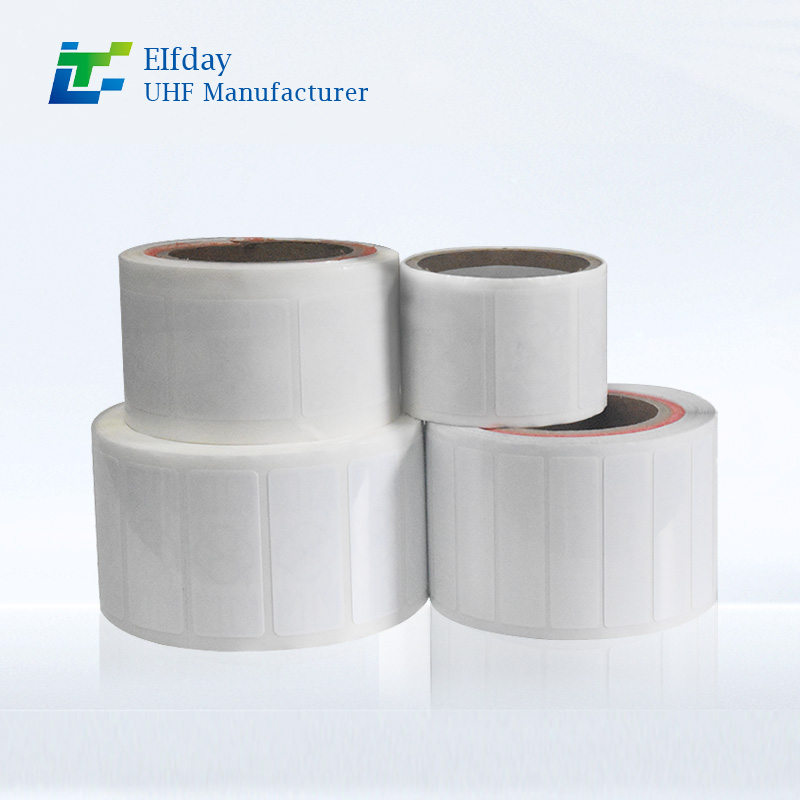
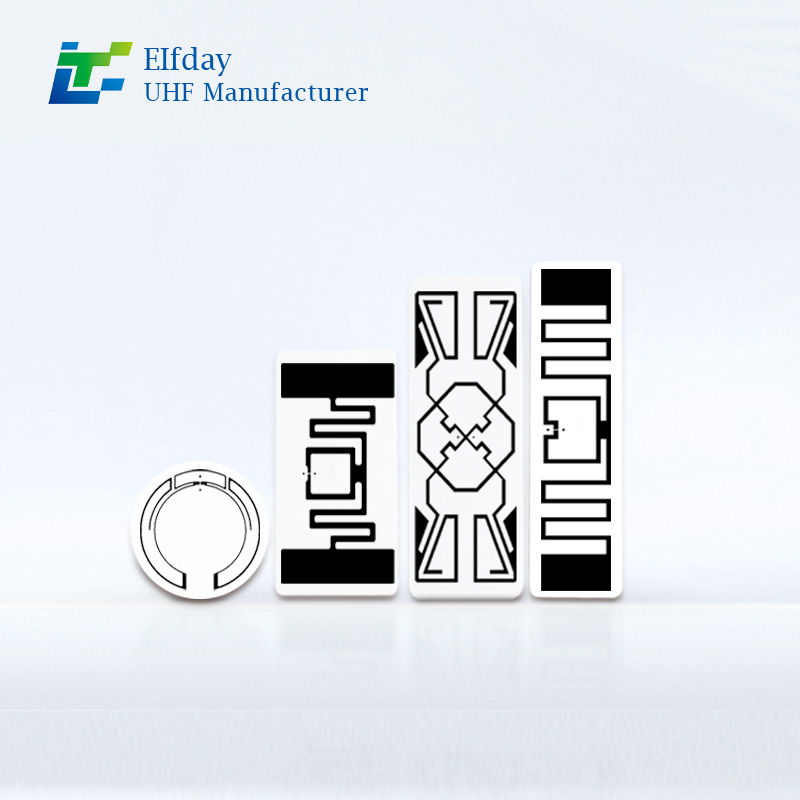
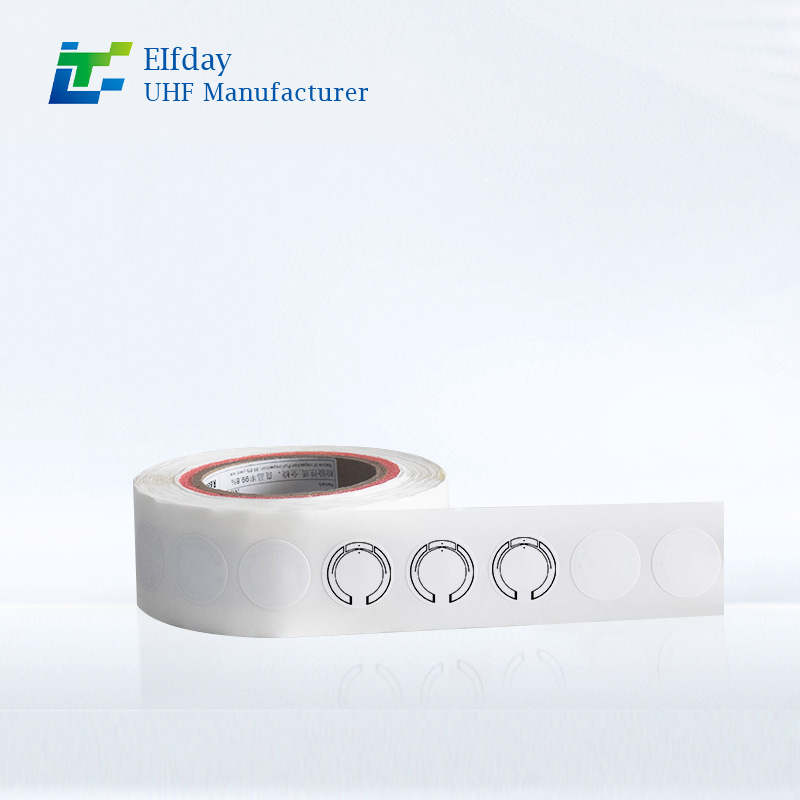
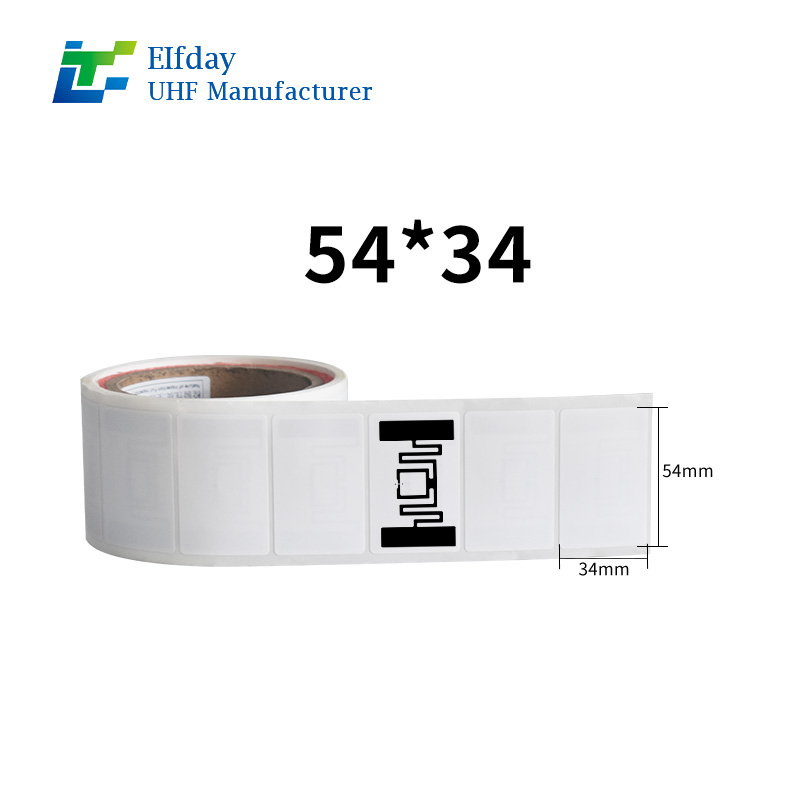
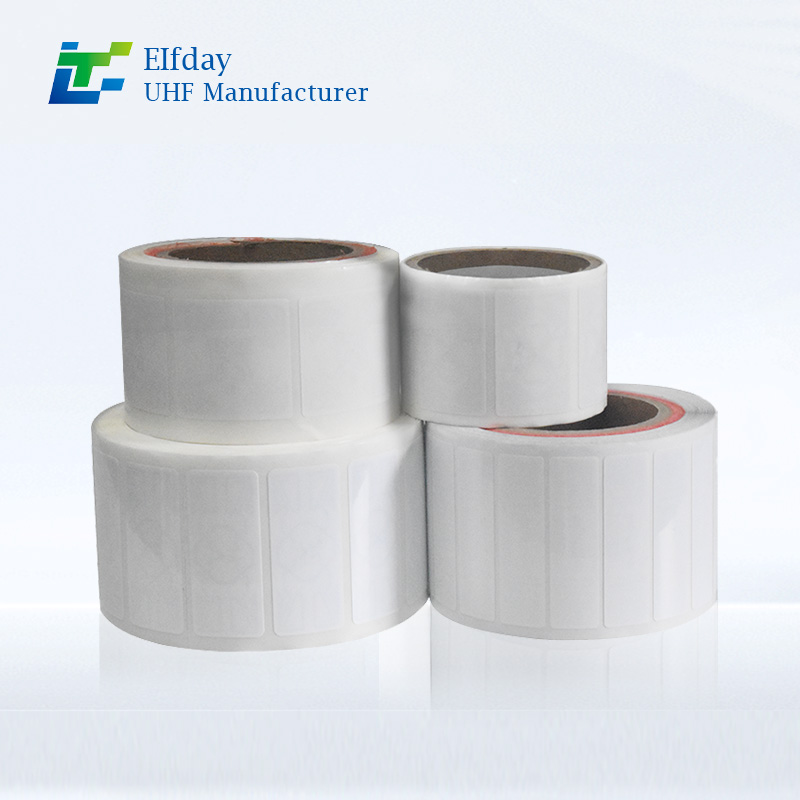
If your food products are packaged in cardboard, plastic trays, or composite materials, you have a lot of flexibility. Standard “wet inlay” tags—which come with an adhesive backing—can be applied directly to the packaging and perform reliably.
But the moment you need to track metal cans, foil pouches, or metal-lined packaging, you enter a different category. Metal reflects RFID signals and can detune a standard tag to the point where it becomes unreadable. In these cases, you need “on-metal” tags. These contain a layer of material that isolates the antenna from the metal surface, allowing the tag to perform as intended.
Similarly, if your containers are reusable—like plastic totes or steel bins—you may want rugged, hard-case tags that are mounted with rivets or strong adhesives. These are designed to withstand repeated impacts, cleaning cycles, and years of use. They cost more upfront, but they pay for themselves over time by eliminating the need to constantly reapply disposable tags.
Think about your workflow, too. Are your tags going to be applied by hand on a packing line, or do you need them to be embedded into packaging during manufacturing? Some suppliers offer RFID tags for food tracking that are integrated directly into labels, boxes, or even produce trays, making the application process seamless and reducing labor costs.
Read Range and Infrastructure
This is where many people get excited—and sometimes disappointed—when they first implement RFID. The theoretical read range listed on a tag’s datasheet is measured under perfect conditions: in open air, with a high-power reader, no interference.
Your real-world environment will be different.
If you are planning to read tags as they move through a loading dock, you will want tags with a strong, consistent read range. But you also need to consider reader placement. Are you installing fixed readers at doorways? Are you using handheld readers for cycle counts? Will your staff be using forklift-mounted systems?
Each scenario calls for slightly different tag characteristics. For fixed reader portals, you typically want tags with a broad radiation pattern so they can be read regardless of orientation. For handheld readers, orientation matters less because the operator can aim the antenna.
Before you commit to a large order, it is always wise to run a small pilot. Take a few candidate tags, apply them to your actual products, and test them with your actual readers in your actual facility. A tag that looks perfect on paper may struggle in a real-world cold room with metal shelving and densely packed inventory.
Data Storage and Encoding
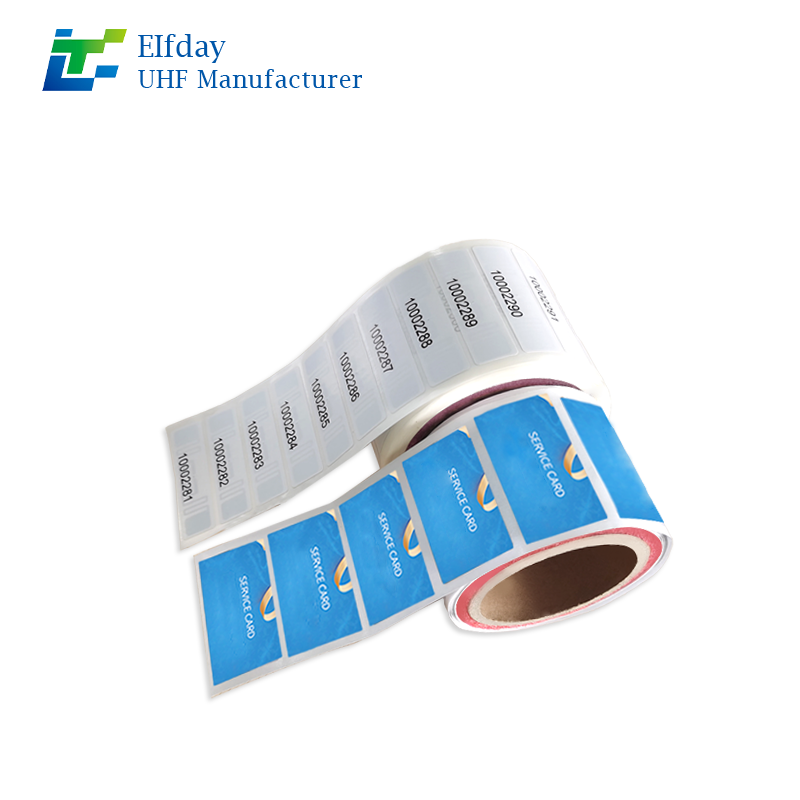
Another factor that is often overlooked is how much data you need the tag to store. Most supply chain applications use tags with a standard EPC (Electronic Product Code) memory bank that holds a unique identifier. That ID is then linked to a database where all the relevant information—lot number, expiration date, origin, temperature logs—is stored.
But some food tracking scenarios benefit from tags with additional user memory. For example, if you want to write temperature data directly onto the tag as a product moves through the cold chain, you may need a tag with extra memory and sensor capabilities.
Semi-passive or active RFID tags for food tracking can even include onboard sensors that record temperature, humidity, or shock events. These are more expensive, but they provide a level of detailed traceability that passive tags cannot match. If you are shipping high-value perishables like seafood or specialty cheeses, that added layer of data can be invaluable during audits or in the event of a quality dispute.
Compliance and Industry Standards
Depending on where you operate, you may need to align with specific industry standards. Grocery retailers, for instance, often have their own RFID tag specifications for suppliers. If you are shipping into major retail chains, they may require a particular tag form factor, chip type, or frequency standard to ensure interoperability with their existing infrastructure.
GS1 standards, including the use of SGTIN (Serialized Global Trade Item Number) encoding, are common in food supply chains. Using tags that support these standards ensures that your data can be shared seamlessly with trading partners, which is essential for end-to-end traceability.
If your business exports internationally, also check frequency regulations. Most countries allow UHF RFID in the 860–960 MHz range, but the specific bands vary. A tag that works perfectly in the United States may need a slightly different tuning for European or Asian markets. Good tag suppliers will offer versions optimized for each region.
The True Cost of Getting It Wrong
When businesses first look into RFID tags for food tracking, the natural instinct is to focus on the price per tag. And yes, budget matters. But the real cost is not the tag—it is the failure of the system.
We have seen companies choose the cheapest tag available only to find that fifty percent of their reads fail at the dock door. Suddenly, they are dealing with manual interventions, incomplete data, and frustrated staff who start to distrust the technology. The money saved on tags gets eaten up many times over by labor costs and lost efficiency.
On the flip side, we have also seen businesses over-specify. They invest in rugged, high-memory, sensor-equipped tags for applications where a simple, disposable label would have worked perfectly. That is money left on the table.
The sweet spot is matching the tag to the specific use case—no more, no less.
A good approach is to think in layers. For high-value reusable assets like pallets, bins, or trays, invest in durable, long-life tags. For individual cases or consumer units, use lower-cost, disposable inlays that are optimized for your environment. Many successful food tracking systems use a combination of both, balancing cost and performance across the supply chain.
Working with the Right Partner
This is perhaps the most practical piece of advice I can offer: find a supplier who asks questions before they sell you anything.
If a supplier simply sends you a price list without asking about your operating temperatures, surfaces, read points, or existing infrastructure, consider that a red flag. The right partner will want to understand your workflow, your challenges, and your goals. They should be willing to send sample tags for testing and help you interpret the results.
Look for manufacturers with experience in food applications specifically. Food tracking has nuances that general warehouse tracking does not. Things like food safety regulations, washdown requirements, and the need for extreme temperature tolerance are not always top of mind for suppliers focused on retail apparel or general logistics.
A knowledgeable partner can also help you avoid compatibility issues. Not all readers work equally well with all tag chips. Some readers have better sensitivity, some handle dense tag populations better. If you already have reader infrastructure in place, your tag choices should complement it.
Looking Ahead
The technology behind RFID tags for food tracking continues to evolve. We are seeing smaller form factors, better performance around challenging materials, and tags that are increasingly made with sustainable materials—a growing concern for environmentally conscious food companies.
There is also a trend toward integrating RFID data with broader software platforms. It is no longer just about knowing where a pallet is. It is about using that data to predict spoilage, optimize inventory turns, and automate reordering. The tags you choose today should be compatible with where your data strategy is heading tomorrow.
But even as the technology advances, the fundamentals remain the same. A well-chosen tag—matched to your environment, your workflow, and your data needs—will deliver reliable, actionable information day after day. A poorly chosen one will create headaches, no matter how sophisticated the rest of your system is.
Making Your Decision
If you are currently evaluating RFID tags for food tracking, start by gathering your requirements. Document your temperature ranges, the types of surfaces you will tag, your read points, and your volume. If you can, define what success looks like: fewer recalls, faster receiving times, more accurate inventory, or all of the above.
Then, engage with a supplier who can help you translate those requirements into a shortlist of candidate tags. Test them. Walk the warehouse with a handheld reader. Watch how they behave on your conveyors and through your dock doors. Pay attention to the small things—how easy they are to apply, whether they stay attached, and how consistently they read.
That hands-on process will give you more confidence than any datasheet or sales pitch ever could.
RFID technology, when done right, has a way of quietly transforming operations. The data becomes reliable enough that you stop thinking about the technology and start thinking about what you can do with the visibility it gives you. And that is where the real value lies.
If you are ready to take the next step, consider reaching out for a sample kit. Testing a few different tag types in your own environment is the fastest way to see what works—and what does not. Your supply chain, your team, and ultimately your customers will thank you for taking the time to get it right.