








How to Integrate RFID Tags for Patient Tracking with Existing EHR Systems
Hospitals and healthcare facilities today face a familiar challenge: they invest in cutting-edge technologies, but those technologies often operate in silos. You might have a state‑of‑the‑art electronic health record system that centralizes patient data beautifully, yet the moment a patient moves from the emergency department to radiology, visibility into their exact location and status becomes murky. This is where RFID tags for patient tracking enter the picture—but only if they integrate seamlessly with the systems you already rely on.
When RFID tags for patient tracking work in harmony with your EHR, something transformative happens. Data stops being trapped in separate dashboards and starts flowing directly into clinical workflows. Nurses no longer have to log into a separate portal to locate a patient; instead, that information appears alongside vital signs, medication histories, and care plans. The result is not just operational efficiency—it is safer, more responsive care.
If you are considering deploying RFID tags for patient tracking, or if you already have a system but it is not yet talking to your EHR, this guide walks you through the integration process. Done right, integration turns a location‑tracking tool into a true clinical asset.
Why Integration Matters More Than You Think
Before diving into the how, it is worth pausing on the why. Many healthcare organizations begin using RFID tags for patient tracking primarily to reduce patient wait times or improve workflow efficiency. Those are worthwhile goals. But when those RFID systems operate independently, they create a new problem: fragmented data.
Consider a busy medical‑surgical unit. A nurse needs to know whether a post‑operative patient is back from physical therapy to administer pain medication. Without integration, she must check a separate tracking screen, then cross‑reference that information with the EHR’s medication schedule. With integration, the moment the patient returns to the unit, the system can flag the nurse through the EHR itself—sometimes even triggering a task reminder.
Integration also strengthens patient safety. When RFID tags for patient tracking feed real‑time location data directly into the EHR, clinical decision support tools become more intelligent. A medication can be flagged if the patient is not in the correct unit. A fall risk alert can be prioritized if a high‑risk patient has been out of bed longer than expected. The EHR becomes a dynamic, location‑aware system rather than a static record.
Step 1: Define Your Integration Goals
A successful integration does not begin with APIs or middleware. It begins with clarity about what you want to achieve. Ask yourself: what clinical or operational problems are you trying to solve by connecting RFID tags for patient tracking with your EHR?
Some common integration goals include:
Automatically updating patient location within the EHR to save nursing time.
Triggering EHR‑based alerts when a patient leaves a designated safe zone.
Syncing workflow milestones—such as “arrived in pre‑op” or “transferred to PACU”—without manual data entry.
Using location data to enhance patient flow dashboards already embedded in the EHR.
Ensuring that patient‑specific device alarms (like wander management) are recorded in the patient’s medical record.
Your goals will directly shape the technical approach. For simple location updates, a lightweight integration may suffice. For complex clinical workflows involving multiple departments, a more robust architecture is necessary.
Step 2: Understand the Core Components
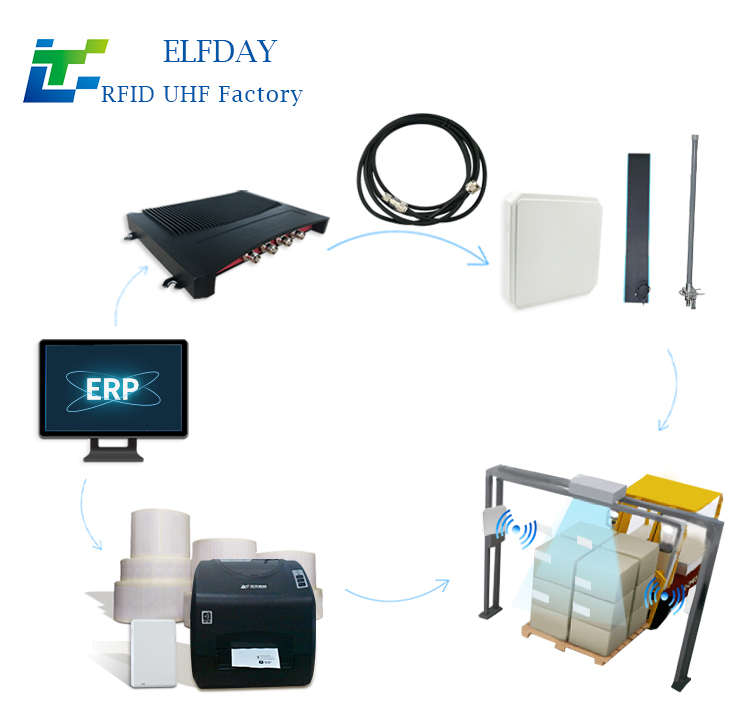
To integrate effectively, you need a basic understanding of how the two systems communicate. Most modern RFID tags for patient tracking solutions use a real‑time locating system architecture. This typically includes:
RFID tags worn by patients (often as wristbands).
Readers and antennas placed strategically throughout the facility.
A locating engine—software that processes tag signals and determines location.
An application layer that presents location data in a user interface.
Your EHR, on the other hand, holds structured patient data: demographics, admissions, transfers, discharges, medication orders, and clinical notes. The integration layer sits between these two systems, translating location events into data the EHR can understand and act upon.
Most integrations happen through HL7 or FHIR standards, which are the universal languages of healthcare data exchange. HL7 messages carry patient demographics, admission/discharge/transfer events, and clinical observations. FHIR, the newer standard, allows more granular and flexible data exchange via RESTful APIs.
Step 3: Choose the Right Integration Method
There are three common ways to connect RFID tags for patient tracking with an EHR. Each has trade‑offs in terms of complexity, cost, and real‑time capabilities.
Option A: Middleware Platform
A middleware platform acts as a bridge. It receives location data from the RFID system, applies business rules (such as “if patient with fall risk leaves room, send alert”), and then formats that data into HL7 or FHIR messages that the EHR accepts.
This approach is often the most flexible. Middleware can also normalize data from multiple RFID systems if you have different technologies across your organization. For healthcare facilities that already use integration engines like Mirth, Rhapsody, or Cloverleaf, adding RFID data is a natural extension.
Option B: Direct API Integration
If both your RFID system and your EHR offer modern APIs, you may be able to connect them directly. This is more common with cloud‑based EHRs that support FHIR APIs. Direct API integration can be faster to implement for specific use cases, such as writing location data to a custom field in the EHR or launching a patient tracking view from within the EHR interface.
The drawback is that API integrations can become brittle if either system changes its endpoints. For mission‑critical workflows, a middleware layer often provides more stability.
Option C: Embedded Vendor Solution
Some EHR vendors have preferred partnerships with RFID technology providers. In these cases, the RFID solution may come with pre‑built connectors certified by the EHR vendor. This is the lowest‑effort option, though it does lock you into a specific ecosystem. If your RFID tags for patient tracking vendor already offers validated integrations with major EHR platforms, this route can significantly reduce implementation risk.
Step 4: Map the Data Flow
Integration is not just about moving data; it is about moving the right data in the right way. You need to map exactly what location events should trigger what actions in the EHR.
A typical mapping might look like this:
RFID system event: Tag associated with patient ID 12345 is detected in pre‑op zone.
Integration action: Update patient’s location field in EHR to “Pre‑Operative Holding” and timestamp the event.
Optional downstream effect: Trigger a notification to the surgical team that the patient is ready.
Another example:
RFID system event: Tag associated with a dementia patient approaches an exit door.
Integration action: Write an alert to the EHR’s clinical decision support system.
The system displays a pop‑up warning on the nursing station monitor and logs the event in the patient’s safety record.
The key is to involve clinical staff in this mapping process. They are the ones who will ultimately rely on the integrated system, and their input ensures the alerts and data flows align with actual workflows rather than creating noise.
Step 5: Address Patient Matching and Identity
One of the most delicate aspects of integration is ensuring that the RFID tag is correctly associated with the right patient record in the EHR. If this link is broken, location data becomes meaningless—or worse, dangerous.
Most facilities handle this at the point of admission. When a patient is registered in the EHR, a wristband with an RFID tag for patient tracking is printed and assigned. The tag’s unique identifier is stored in both the RFID system and, often, in a custom field within the EHR or a reference table managed by the integration middleware.
From that moment forward, the integration layer knows that any location data from that tag belongs to that specific patient encounter. When the patient is discharged, the association is broken, and the tag can be deactivated or wiped for reuse if it is a reusable model.
This workflow must be tightly controlled. Barcode scanning at the time of wristband application, with a verification step against the EHR, is a common safeguard to prevent mismatches.
Step 6: Test, Test, and Test Again
Integration between RFID tags for patient tracking and an EHR touches clinical workflows directly. This is not the kind of project where you can “go live and fix issues later.” Rigorous testing is essential.
Start with a pilot unit—perhaps a medical‑surgical floor or an emergency department where patient flow is well understood. During testing, focus on:
Accuracy: Does the location data match actual patient movements?
Timeliness: Are updates reaching the EHR within an acceptable latency (typically seconds, not minutes)?
Alert reliability: Are clinical alerts firing appropriately, without excessive false positives?
Data integrity: Are patient identities correctly maintained throughout the encounter?
Involve frontline nurses and physicians in the testing phase. Their feedback will uncover workflow mismatches that technical testing alone would miss. It is far better to refine the integration during a pilot than to roll out a system that frustrates clinical staff.
Step 7: Train for Adoption
Even a perfectly executed integration will fail if clinical staff do not trust or understand it. Training should emphasize not just how to use the integrated system, but why it makes their work easier and safer.
Show nurses how RFID tags for patient tracking now automatically populate location fields in the EHR, saving them dozens of manual updates each shift. Demonstrate to charge nurses how the patient flow board updates in real time, helping them manage bed assignments more efficiently. Walk physicians through how location data appears alongside the patient’s clinical summary, giving them immediate context during rounds.
When staff see that integration reduces friction rather than adding another task, adoption follows naturally.
Step 8: Plan for Ongoing Maintenance
Integration is not a one‑time project. EHRs undergo upgrades, RFID systems receive firmware updates, and your organization’s workflows evolve. A sustainable integration requires:
Clear ownership: Designate a team or individual responsible for monitoring integration health.
Regular validation: Periodically audit a sample of location events to ensure they are correctly reflected in the EHR.
Vendor coordination: Maintain relationships with both your RFID vendor and EHR vendor to stay informed of upcoming changes.
Change management: When workflows change, revisit your integration logic to ensure it still supports current needs.
Many healthcare organizations underestimate the ongoing operational cost of integration. Building these processes from the start prevents the system from slowly degrading over time.
The Clinical Impact of a Well‑Integrated System
When RFID tags for patient tracking are fully integrated with the EHR, the benefits extend far beyond administrative efficiency. Clinicians gain a continuous, real‑time understanding of where patients are and what stage of care they are in—without leaving the EHR interface they already use.
This matters most in high‑acuity situations. A patient in the emergency department waiting for a bed can be monitored remotely; when a bed becomes available, the system can automatically update the bed board and notify the admitting team. A surgical patient’s movement from pre‑op to the operating room to recovery is documented automatically, reducing the risk of handoff miscommunication. A confused patient at risk of wandering can be tracked continuously, with alerts integrated directly into the nursing workflow rather than sounding as a separate alarm that might be overlooked.
In each of these scenarios, the integration does more than move data. It transforms RFID tags for patient tracking from a standalone locating tool into an integral part of the clinical record and care delivery process.
Moving Forward
If your facility already uses an EHR, you have already invested significantly in digitizing patient information. Adding RFID tags for patient tracking without integration means leaving a portion of your clinical picture incomplete. The data exists—the location, the movement, the flow—but it lives outside the record where care decisions are made.
Integration closes that gap. It takes the real‑time visibility that RFID provides and embeds it directly into the clinical workflows your teams already trust. The result is a healthcare environment where information follows the patient seamlessly, from admission through discharge, without requiring staff to piece together data from multiple systems.
Start with a clear vision of what you want to achieve. Choose an integration approach that fits your technical environment and resources. Map your workflows carefully, test thoroughly, and train your teams with the benefits front and center. When done right, the integration of RFID tags for patient tracking with your EHR becomes not just a technology project, but a foundation for safer, more efficient, and more responsive patient care.